
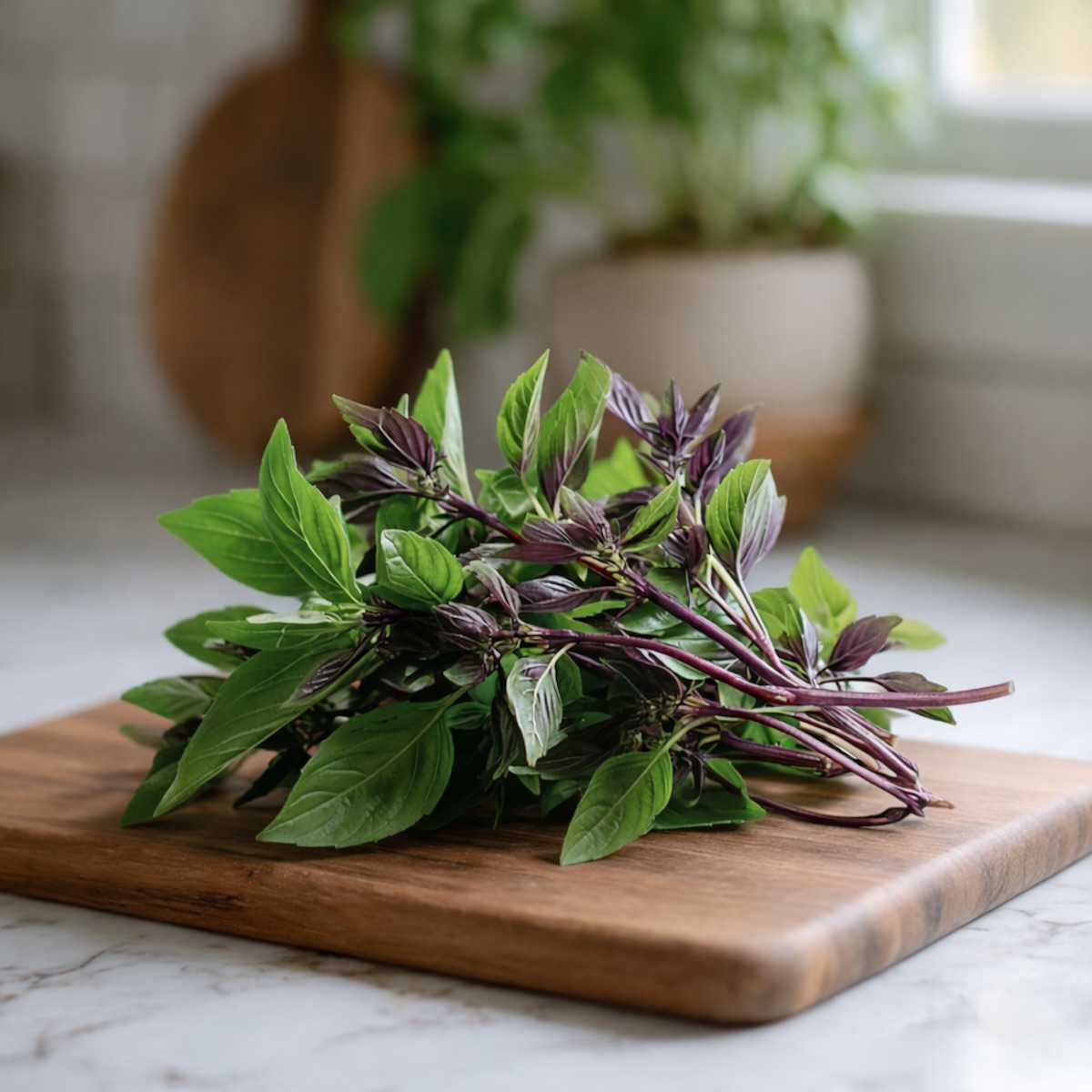
Thai basil is one of those ingredients that instantly makes your kitchen smell like a Thai restaurant. The moment it hits a hot curry, everything becomes more fragrant, more fresh, and way more fun!
As a Thai cooking instructor married to a Thai Hubby, it shows up in our kitchen all the time. It gets tossed into bubbling curries, stirred into noodles, sprinkled over soups, and sometimes even blended into fun fusion recipes like Thai basil pesto. Once you start using it, you’ll wonder how you ever cooked Thai food without it!
What Is Thai Basil?
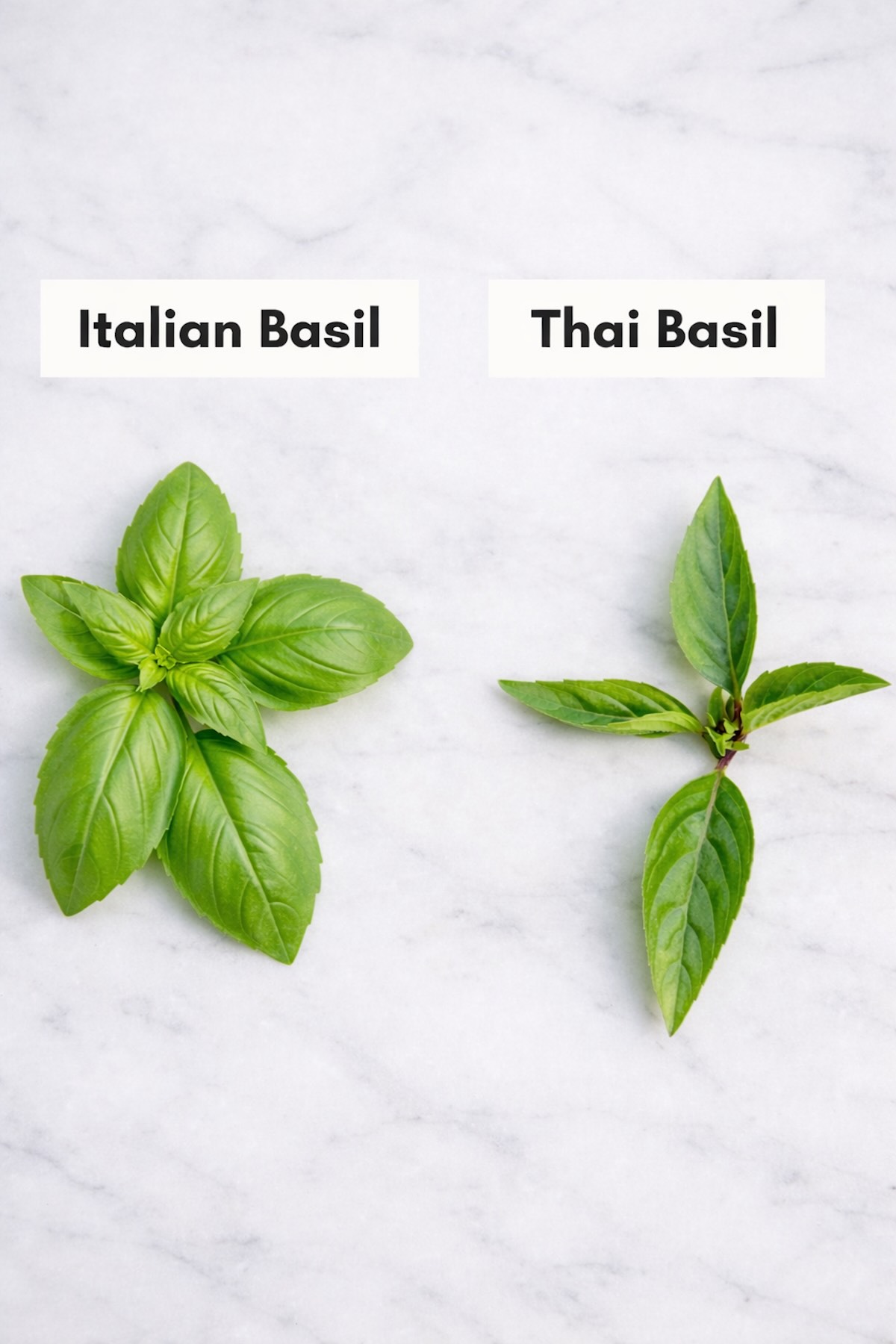
Thai basil is a type of basil commonly used in Southeast Asian cooking, especially Thai food. It looks similar to Italian basil at first glance, but it’s sturdier and holds up much better in hot dishes.
That’s why you’ll see it tossed into curries right at the end, where it softens slightly but still keeps its shape. It’s not just a garnish, it’s part of the flavor.
Thai basil has been used in Southeast Asian cooking for centuries, but it probably didn’t originate in Thailand. Basil varieties are thought to have originated in India and spread throughout Asia through trade and migration.
What Does It Taste Like?
Thai basil has a slightly sweet flavor with hints of licorice and anise. It’s more bold and aromatic than Italian basil.
When you add it to a hot dish, it releases this fresh herbal aroma that balances rich coconut milk and spicy sauces perfectly. It’s one of those flavors that makes people say, “This tastes like legit Thai food!”
What Does It Look Like?
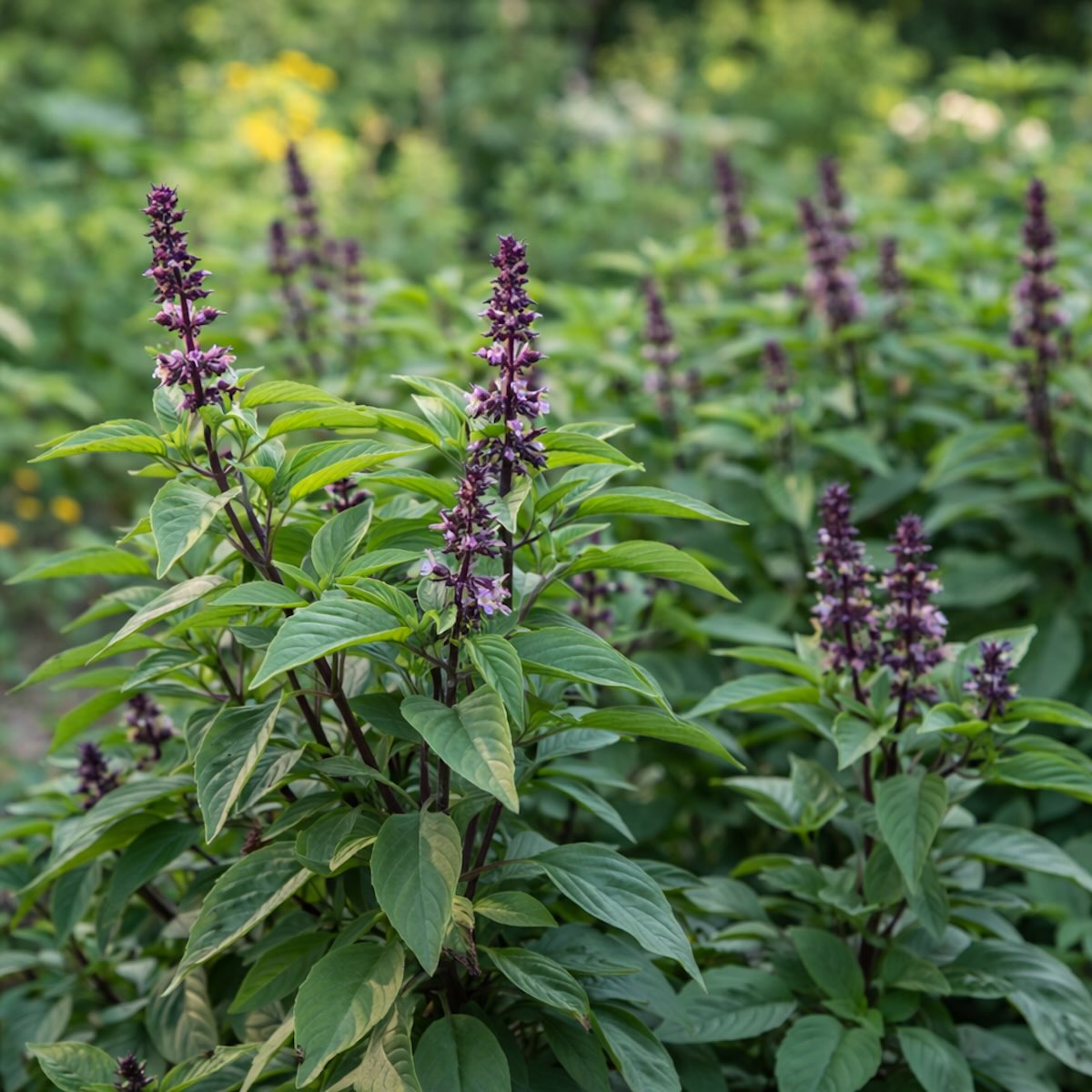
Once you know what to look for, Thai basil is easy to spot:
- Narrow, pointed green leaves
- Purple stems
- Small purple flowers
- Leaves that are sturdier than Italian basil
Italian basil has wider, softer leaves and green stems, so side-by-side the difference is pretty clear.
Thai Basil vs Holy Basil
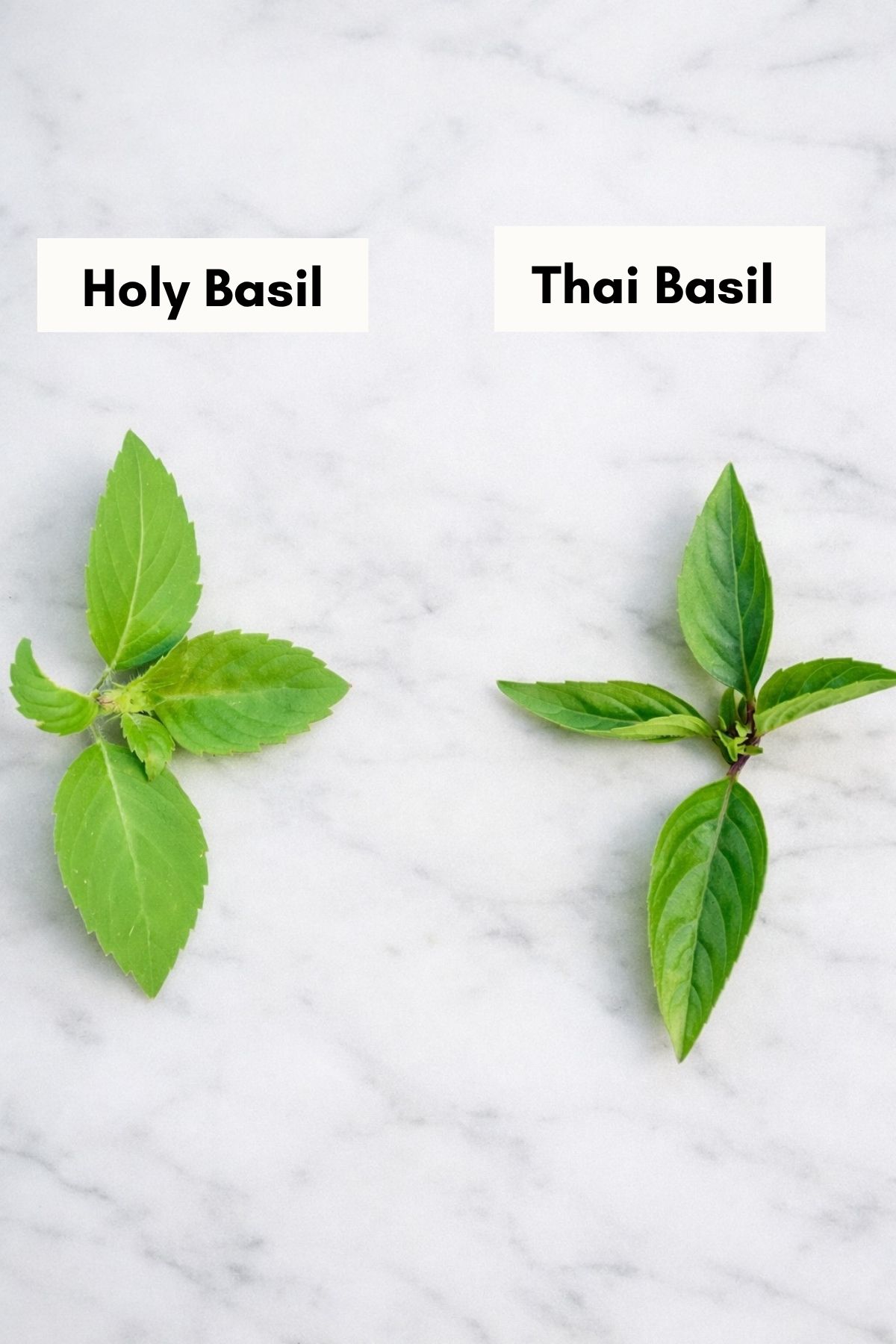
This is where things get confusing!
Thai basil and holy basil are completely different herbs and are used in different Thai dishes. But they’re often mixed up, so let me clear things up for you dear!
Thai basil is:
- slightly sweet
- smooth leaves
- used in curries like Beef Panang Curry and soups
Holy basil is:
- peppery and more intense
- jagged leaves
- used in Pad Krakow, aka Thai Spicy Basil Chicken, or Drunken Noodles
How Is It Used in Thai Cooking?
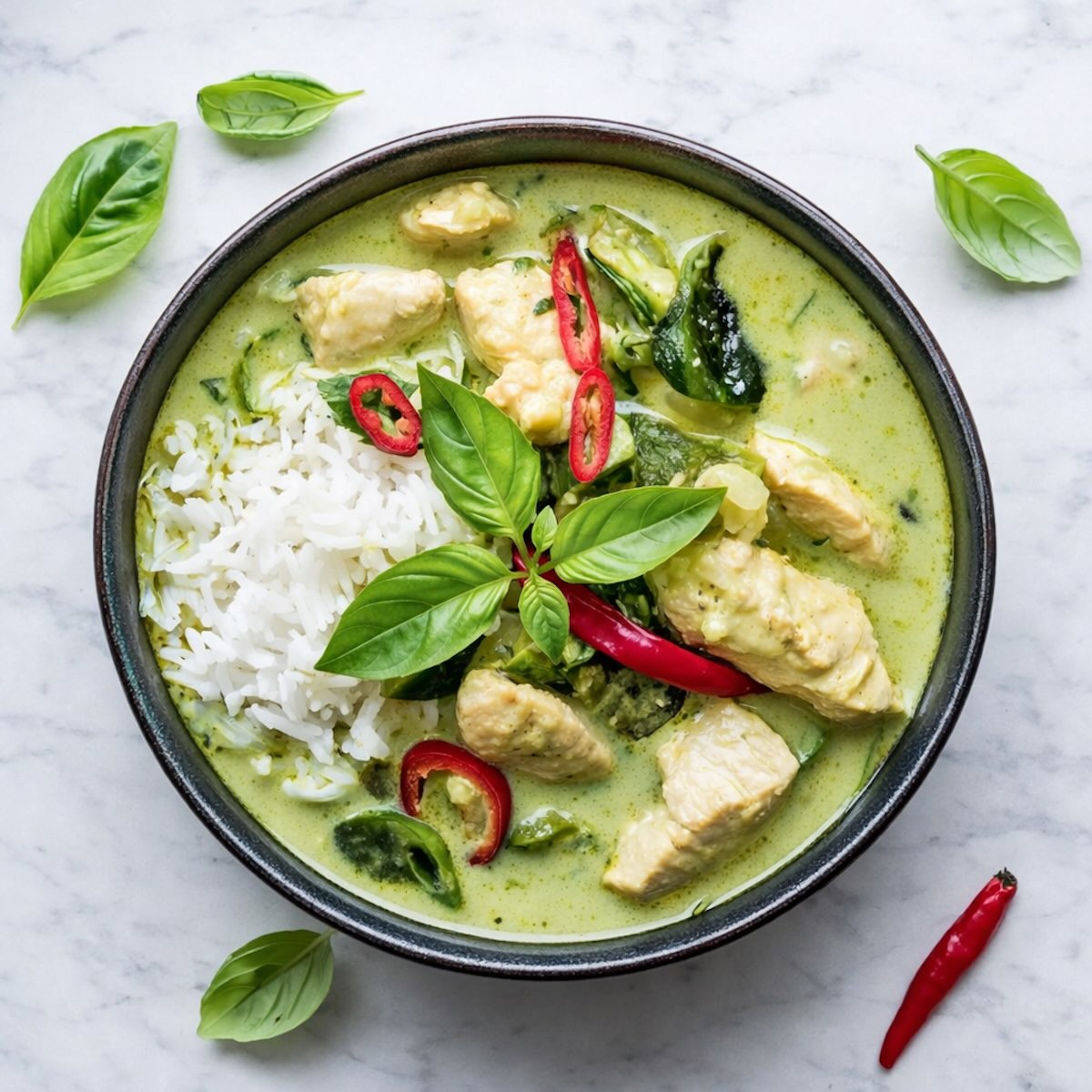
It’s usually added at the very end of cooking. You toss it in after turning off the heat and gently stir until just wilted, which keeps the flavor bright and fresh. Think of it like the finishing touch that wakes everything up.
You’ll often see it in dishes like:
- Thai Green Curry – Stirred in right before serving, adding that signature licorice-like aroma.
- Thai Massaman Curry – Sprinkled on top at the end to add a fresh herbal contrast to the rich, creamy coconut curry.
- Thai Chu Chee Curry – Used as a finishing garnish to brighten the bold red curry sauce.
- Instant Pot Thai Chicken Curry –Added last for freshness and a pop of flavor.
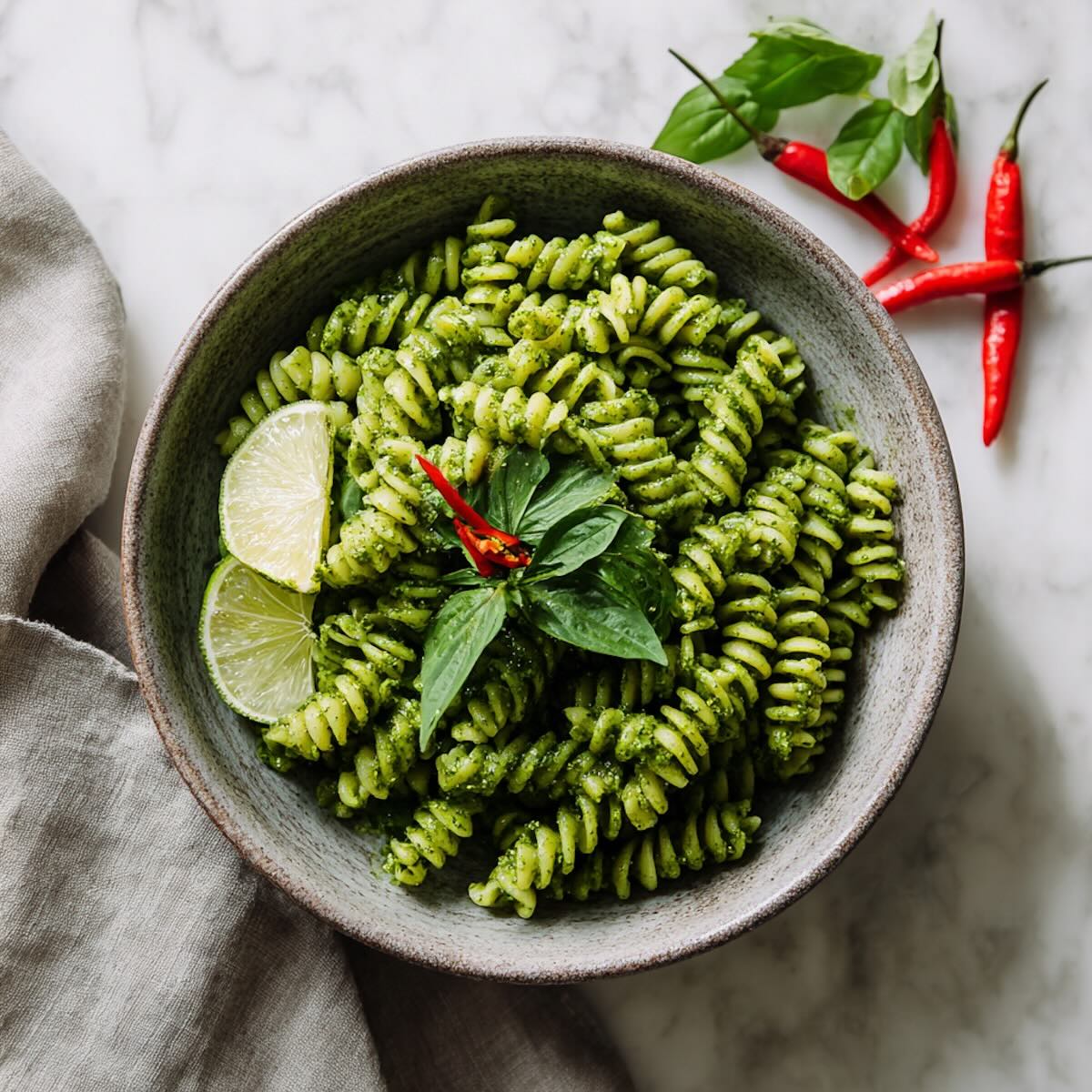
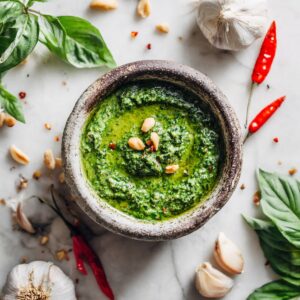
- Thai Basil Pesto – It’s blended as the star ingredient, creating a bold, herby Thai-inspired sauce.
Where Can You Buy It?
It’s getting easier to find, which makes me so happy! Other than our garden, (come and get some if you live in Boone!) you can usually find it:
- Online
- Asian grocery stores
- farmers markets in summer
- some regular grocery stores
- plant nurseries
Tips for Growing Thai Basil
If you see a plant, grab it! It grows like crazy in warm weather, so you’ll have a summer filled with mind-blowing Thai Basil dishes!
A few simple tips:
- Plant in full sun or partial sun
- Water regularly, but don’t let it get soggy
- Pinch off the tops to encourage bushier growth
- Harvest often, it grows back quickly
- Bring indoors before the first frost
Can You Freeze Thai Basil?
Yes, and it’s a great way to save extra. All you have to do is:
- wash and dry leaves
- place in freezer bag
- remove air
- freeze
You can also blend it with oil and freeze in cubes for easy cooking later.
FAQs
Thai basil has a stronger flavor with hints of licorice and holds up well in hot dishes. Regular basil, also known as Italian basil, is milder, sweeter, and more delicate.
Italian basil is the best substitute. For a closer flavor, mix Italian basil with a little mint. Holy basil is more peppery and intense, but it can also work in a pinch, but the dish will taste less traditional.
Holy basil has been studied for stress support and may help lower cortisol. Thai basil hasn’t been studied as much, but it still contains antioxidants and is a healthy addition to meals.
My Favorite Way to Use It
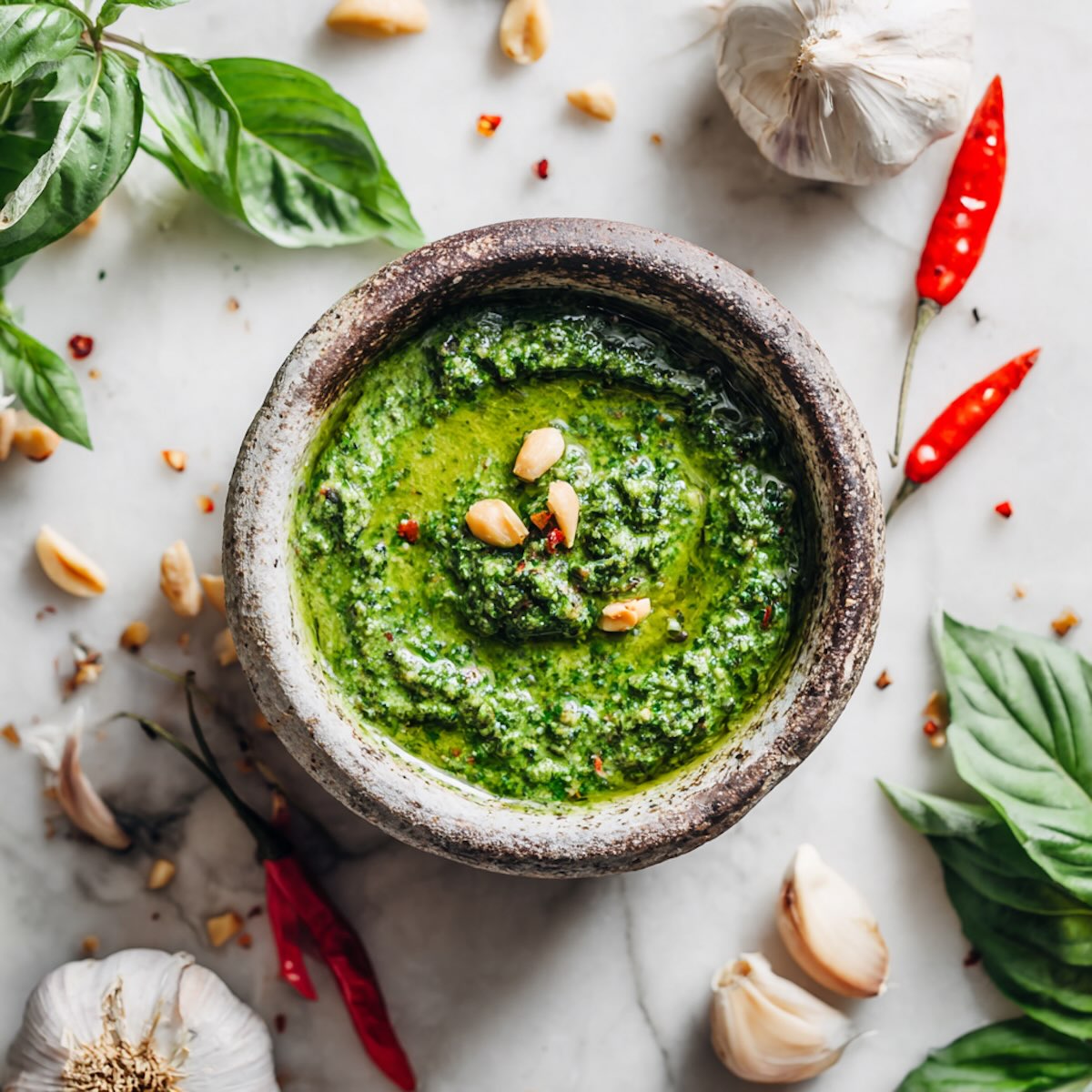
Thai Hubby is has the green thumb in our family and can grow some Thai Basil and Holy Basil like no one else!
When our herb garden is bursting with it, I love to use it in Thai basil pesto. It’s not traditional, but it’s such a fun way to use a big bunch at once and throw it on pasta, or as a sauce for rice bowls. It’s also a great beginner recipe if you’re just starting to cook with Thai flavors!
Let’s Stay Connected Dear!
And if you want to learn how to use it in person, come join one of my Thai cooking classes in Boone, NC!
Love learning Thai kitchen tips? Sign up for my Thai-Foodie Substack newsletter and get my free Substitution Hacks Guide download, your cheat sheet for swapping Thai ingredients no matter where you live!
If you make it, I want to see! Take a pic and tag me on Instagram @thaifoodie!
This post contains links to affiliate websites, such as Amazon, and I receive an affiliate commission for any purchases made by you using these links. I appreciate your support!

Leave a Reply