
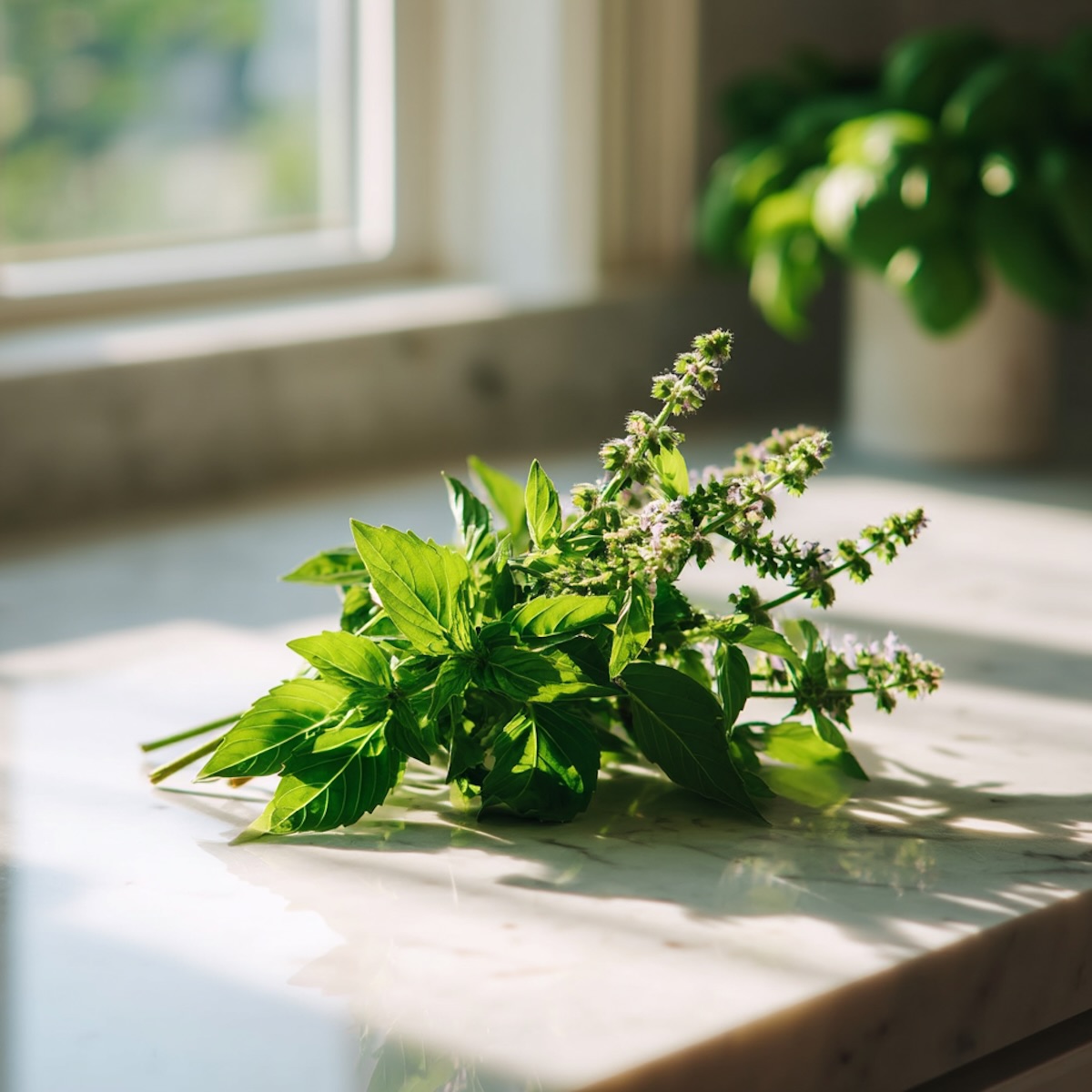
Are you just as confused as I’ve been about what’s Holy Basil? Don’t worry, these top FAQs answered by a Thai cooking class instructor will help you out!
As a Thai cooking instructor married to a Thai hubby, Holy Basil always is well loved and used in our kitchen! It gets stirred into sizzling stir-fries like Pad Krapaw, tossed in Drunken Noodles, and added right at the end so the flavor stays fresh. Once you try cooking with it, you’ll understand why so many Thai people adore it!
What Is Holy Basil?
Holy basil is a type of basil used in Thai cooking, especially in stir-fried dishes. In Thai, it’s called krapaw (กะเพรา), which you may recognize from most Thais favorite dish, Pad Krapaw, aka Spicy Thai Basil with Chicken.
There are two kinds of holy basil, a red and “white”, but the “white” isn’t really white, but green. Confusing right?
- The red variety has purple stalks and is more pungent, and the white version has green stalks and less intense flavor.
- The white version is used most often in Thai dishes.
What does Holy Basil look like?
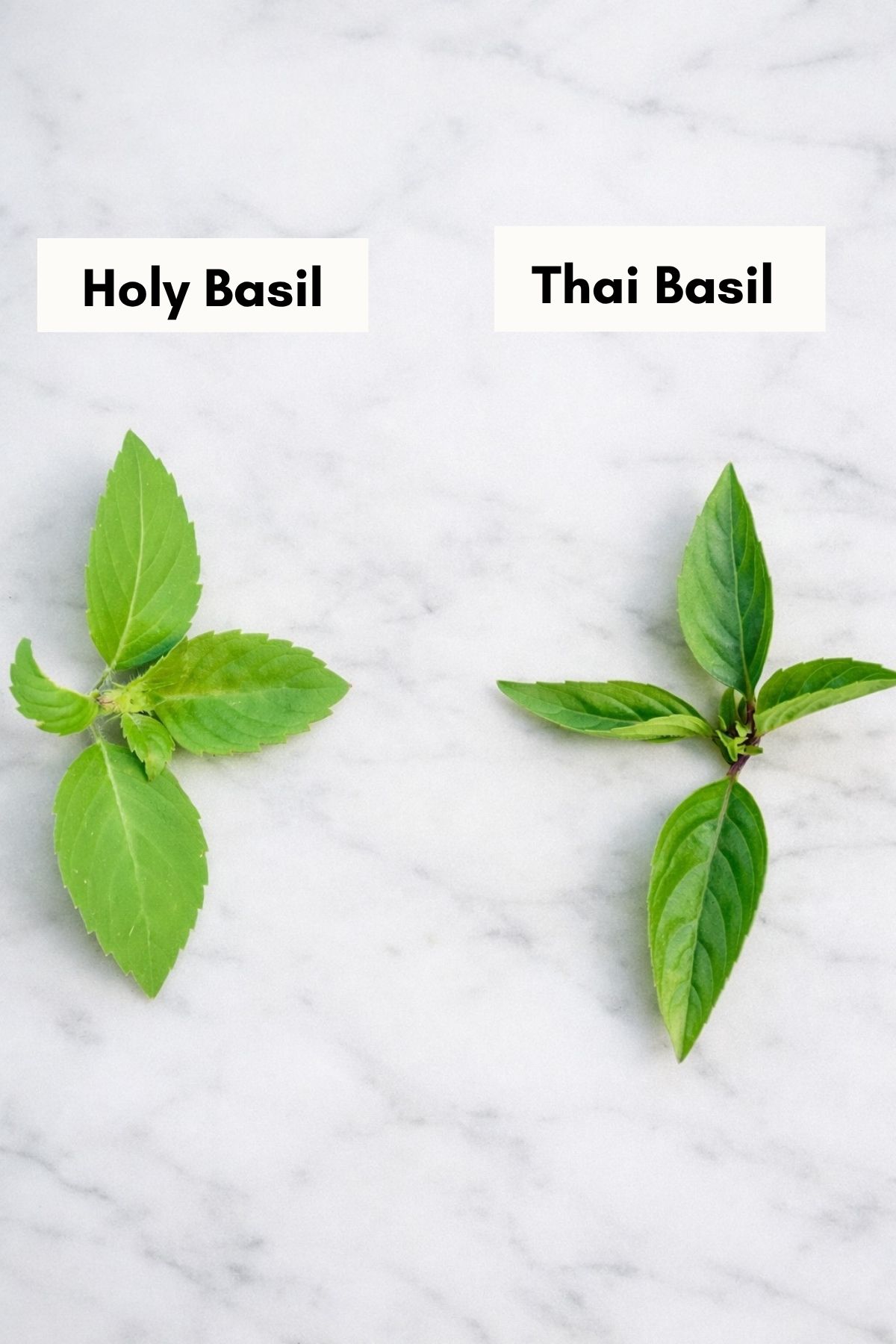
Once you know what to look for, it’s easy to spot:
- Jagged, pointed green leaves
- Slightly fuzzy texture
- White or pale flowers
- Green or purple stems depending on variety
- More wild and rustic looking than Thai basil
- Thai basil has smoother leaves and purple stems, so side-by-side the difference becomes much easier to see.
What’s does it taste like?
- Holy basil has a bold, peppery flavor with hints of clove and spice. Some people say it is so intense it can create a tingling feel on your tongue, like a Sichuan pepper.
- Thai basil has a sweeter flavor with notes of licorice or anise. It is more aromatic and less intense than holy basil.
- Italian basil is the mildest of the three, with a sweet, fresh, classic basil flavor commonly used in pesto and pasta dishes.
That’s why it works so well in fiery stir-fries, while Thai basil shines in curries and Italian basil is perfect for Mediterranean cooking!
Where did it get its name?
Hindus call holy basil tulsi, and their culture believes that it is a sacred plant.
“Tulsi” means The Incomparable One in Sanskrit. In Hindu mythology, Tulsi represents Lakshmi, wife of Vishnu, one of the most important Gods in Hinduism. In India, the holy basil plants are put in containers around Hindu temples to help cleanse visitors.
How can you use it?

You’ll often see it in dishes like:
- Pad Krapaw– The classic Thai spicy basil stir-fry and most Thais, including my Thai Hubby’s most loved comfort foods.
- Drunken Noodles – Adds bold herbal flavor to spicy noodles.
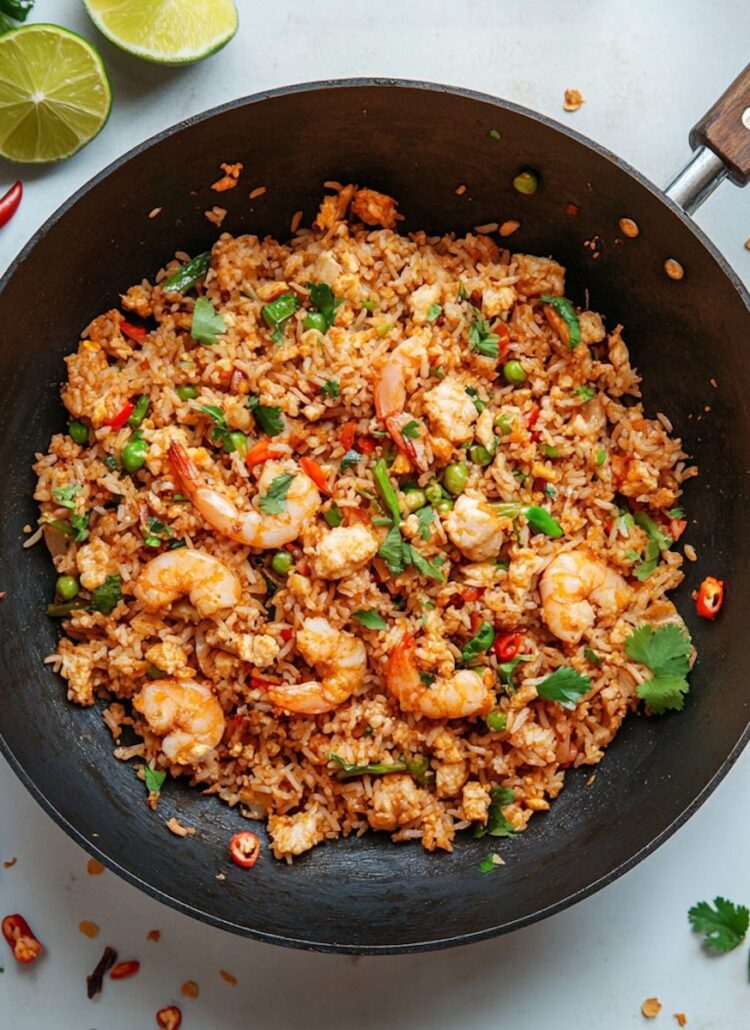
- Thai Basil Chicken Fried Rice– A fun way to use up both rice and extra holy basil!
- Thai Basil Pesto– Traditionally Thai basil is used, but if you have holy basil, I love using that as a Thai basil sub!
How do you grow it?
If you can grow it, do it like we do! It always brings me such joy to run outside, pluck some quick, run back in and throw it in my stir-fry right after I turn off the heat.
A few simple tips:
- Plant in full sun or partial sun
- Water regularly, but don’t let soil stay soggy
- Harvest often to encourage new growth
- Pinch tops for a bushier plant
- Bring indoors before frost if needed
It grows great in pots too, which is great news for apartment cooks and patio gardeners!
Can you freeze it?
Yes, and it’s an awesome way to save leaves if you have a big harvest. All you have to do is:
- wash and dry leaves
- place in freezer bag
- remove air
- freeze
You can also chop it and freeze in cubes with a little oil for quick stir-fries later.
Holy Basil FAQs
No. They are different herbs with different flavors and uses. Thai basil is sweeter with notes of licorice or anise. Holy basil is peppery and more intense.
Holy basil is peppery with jagged leaves. Regular basil is sweeter, milder, and has smooth leaves.
Some say that Italian basil is the best sub, but I think Thai basil works great too!
It is always put in at the end of cooking, usually right after you turn off the heat. You gently stir it into the dish until just wilted. If you put it in sooner it will wilt too much and lose its texture and flavor.
It has so many potential health benefits! Check out this Healthline article to learn more, but here are some highlights: protect against infection, lower blood sugar, lower cholesterol, ease joint pain, protect your stomach and reduce stress and anxiety.
It depends. Ashwagandha is often used for stress and sleep, while holy basil is popular for calm focus and daily wellness.
Yes, holy basil can be eaten raw, but it has a strong spicy flavor, so many people prefer it cooked or in tea.
Sherri’s Story
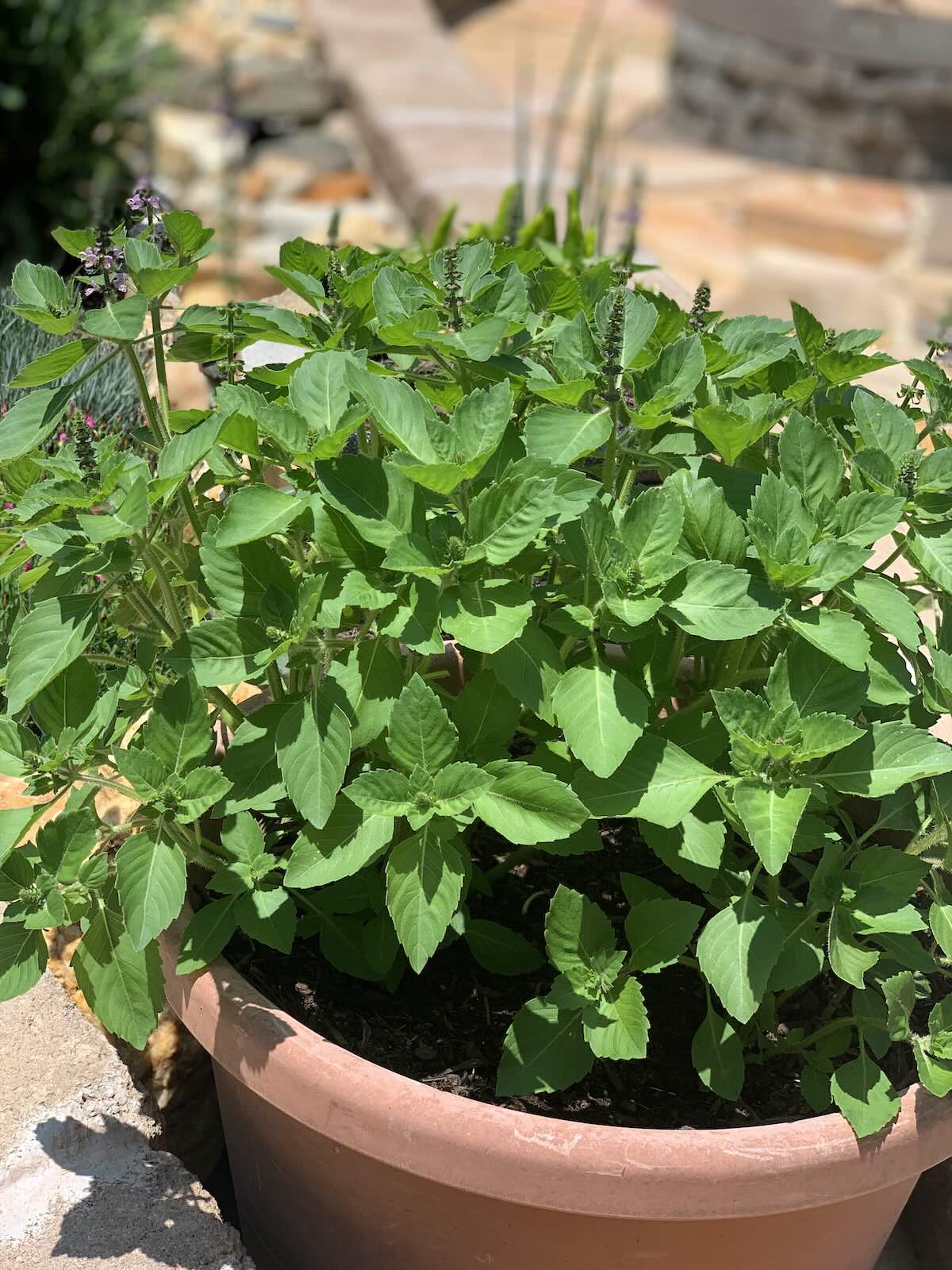
A few summers ago, my Thai Hubby and I and our kids walked into a small stall at our local farmer’s market that was packed with any herb seedlings you could imagine that you could grow at home.
We were meandering around, enjoying the warm summer mountain air as our four kids slurped melting watermelon popsicles from a nearby stand, when all of the sudden, Thai Hubby said, “Look!!” and pointed at a plant with a small handwritten sign that said, “Holy Basil”.
Immediately we both did a happy dance as our kids gazed at us and wondered out loud why we were dancing at the farmers market.
You’d think it wouldn’t be a big deal because you can find Thai basil even at some local grocery stores and online, but Holy Thai Basil is hard to find at grocery stores.
The best place to find it is the farmer’s market (don’t forget to do a happy dance when you find it!), or online.
And once we found it, and started growing it, how did we use it the most??
Our summer weekly meal plans, when our holy basil is at it’s peak, always have either Pad Krapaw, Drunken Noodles or Basil Chicken Fried Rice on the menu!
But Thai Hubby’s absolute fav is Pad Krapaw, like most Thais. It’s is just something magical about garlic, chilies, sizzling meat, and fresh holy basil all spooned over hot jasmine rice with a crispy fried egg on top! Go make it tonight dear!
Let’s Stay Connected Dear!
And if you want to learn how to make it in person, come join one of my Thai cooking classes in Boone, NC!
Love learning Thai kitchen tips? Sign up for my Thai-Foodie Substack newsletter and get my free Substitution Hacks Guide download, your cheat sheet for swapping Thai ingredients no matter where you live!
If you make it, I want to see! Take a pic and tag me on Instagram @thaifoodie!
This post contains links to affiliate websites, such as Amazon, and I receive an affiliate commission for any purchases made by you using these links. I appreciate your support!

[…] And if you can get your hands on it, use Holy Basil, which is what goes in authentic Pad Krapaw! Um, what’s the difference between Holy… […]