

Need a new idea for pasta night that’s quick, easy, and packed with Thai flavor? Green curry spaghetti is here for you dear!
Tender chicken, cauliflower, and peas simmer in a flavor-packed coconut curry sauce, that gets spooned over a happy pile of spaghetti. A sprinkle of cilantro, a few slivers of makrut lime leaves, and a typical weeknight dinner suddenly feels way more fun!
What Is Green Curry Spaghetti
Traditional Thai green curry chicken gets its bold flavor from green curry paste, made with ingredients like Thai green chilies, lemongrass, galangal, and garlic. Simmered with coconut milk, it becomes that creamy, spicy curry you love, often with Thai eggplant,Thai basil, and your favorite protein.
This green curry spaghetti takes that Thai curry foundation and gives it a week night twist.
I swapped spaghetti for rice and easy-to-find cauliflower and peas instead of Thai egg plant, with sauce made from store-bought green curry paste and coconut milk to spoon over the noodles.
Thai-fusion comfort food meets whatever’s in your pantry or fridge!
Why You’ll Love This Recipe
- Thai-inspired flavor taught to you by a Thai cooking class instructor
- Grocery-store-friendly vegetables, no special trip for Thai eggplant needed
- Flexible ingredients, so you can use the pasta and veggies you already have
- A complete dinner in one bowl, with chicken, noodles, and veggies
Green Curry Spaghetti Ingredients You’ll Need

- 8 oz spaghetti noodles, or any pasta of choice: Cook until al dente so the noodles still have a little bite.
- 2–3 tbsp Thai green curry paste: The heart of the sauce! Start with 2 tablespoons, especially if you’re sensitive to heat.
- 1 tbsp cooking oil: Use your favorite neutral cooking oil to fry the curry paste and bring out its aroma.
- 1 can (13.5 oz) coconut milk: Chao-Koh or Aroi-D are my favorite brands.
- 1 lb boneless, skinless chicken breasts, thinly sliced into bite-sized pieces: Thin, evenly sized pieces cook quickly and soak up that curry flavor.
- 2 cups of cauliflower, cut into small florets (or veggies of choice): Keep the florets small so they cook evenly and are easy to scoop up with the noodles.
- 1 cup of frozen or fresh green peas, (or veggies of choice): Peas are an easy-to-find substitute for the Thai eggplant in my Green Curry Chicken recipe, so that’s why I like to use them here too, but feel free to use any veggies you have on hand!
- 1–2 tbsp fish sauce, to taste: Brings that salty, savory Thai flavor. Start with less since your curry paste may already be salty.
- 2 tsp sugar, to taste: A little sweetness balances the heat and salt without making the sauce sugary.
- 1 handful cilantro, roughly chopped: For a fresh, herby finish.
- 1 cup fresh Thai basil leaves: Stir in after turning off the heat so the leaves gently wilt.
- 2 makrut lime leaves, stems removed and finely slivered (optional): A little citrusy aroma goes a long way! Slice them very thinly for sprinkling over the finished dish.
- 1/4 fresh red bell pepper or 2 fresh Thai chilies: because it’s pretty pop of color against the green!
How to Make Green Curry Spaghetti


Step 1: Cook the spaghetti
Cook 8oz. spaghetti noodles or pasta of choice according to the package directions until al dente. Before draining, reserve 1 cup pasta cooking water in case you want to loosen the sauce later. You may not need it though.
While the noodles cook, get your curry going. Have the chicken and vegetables cut before you start so everything is ready to hop into the pan!
Step 2: Fry the curry paste
Heat 1 tbsp cooking oil in a large, deep skillet, wok, or wide pot over medium heat. Add 2-3 tbsp Thai green curry paste and stir until it blends into the oil and smells fragrant, about 1 minute.
Step 3: Add the chicken
Add 1 lb thinly sliced chicken breasts and stir to coat the pieces in the curry paste. Cook, stirring, until the outside turns opaque. The chicken will finish cooking in the sauce.
Step 4: Simmer the vegetables and coconut milk
Stir in 2 cups of cauliflower, cut into small florets (or veggies of choice), 1 cup of frozen or fresh green peas, (or veggies of choice) and 1 can (13.5 oz) coconut milk.
Bring to a gentle simmer, then reduce the heat as needed. Stir occasionally until the vegetables are tender-crisp and the chicken is cooked through.
If the pan looks dry before the vegetables are ready, add a little of the reserved pasta cooking water, a splash at a time. You want enough liquid to help everything cook without turning the sauce watery. Cover briefly if the vegetables need help softening.
Step 5: Taste, season, and serve
Once the chicken is cooked, stir in 1 tbsp fish sauce and 1 tsp sugar. Taste, then add more fish sauce and sugar, as needed.
Want more heat and haven’t used that last tablespoon of paste? Stir the more Thai green curry paste into a little hot sauce to loosen it, return it to the pan, and simmer for a few minutes before tasting again.
Add 1/2 cup fresh Thai basil leaves (or Italian basil) and stir in after turning off the heat so the leaves gently wilt and keep their fragrance.
Divide the cooked spaghetti among bowls and spoon the chicken, vegetables, and curry sauce over the top. Sprinkle with 1/2 cup roughly chopped cilantro and the optional 2 finely slivered makrut lime leaves, divided among the bowls.
Enjoy!

Additions and Substitutions
- Spaghetti substitute: Linguine, fettuccine, bow tie, penne, bean thread noodles, egg noodles, or rice noodles.
- Chicken breast substitute: Boneless chicken thighs, shrimp, tofu or beef.
- Cauliflower and green peas substitutes: Broccoli, zucchini, bell peppers, peas, mushrooms, or a mix. Add quicker-cooking vegetables later so they don’t turn mushy.
- Fish sauce substitute: 1/2 tbsp soy sauce + 1/2 tbsp vinegar of choice (except balsamic) + a pinch of salt, or coconut aminos.
- Cilantro substitute: Thai basil, or leave it off if cilantro isn’t your thing.
- Thai Basil substitute: Holy basil, or Italian basil, or leave it out.
- Makrut lime leaf substitute: A little finely grated lime zest gives a different citrus note, or simply omit the leaves.
Tips for the Best Green Curry Spaghetti
- Cut the cauliflower small. Big florets take longer to soften, and the chicken can dry out while you wait for them.
- Start gently with the heat. Two tablespoons of one curry paste may be much hotter than two tablespoons of another. You can add more, but you can’t scoop it back out!
- Taste before adding all the fish sauce. The curry paste brings salt too. You want savory and balanced, not a salt lick!
- Keep noodles and curry separate for leftovers. That helps keep the pasta from soaking up all the sauce before tomorrow’s lunch.
Behind the Green Curry Spaghetti Recipe

I had written out our weekly menu earlier in the week, but for Wednesday I had written “Random” aka I had run out of ideas for what to make for dinner, so I thought I’d figure it out later.
Random Night had arrived, so I searched online, and scrounged around in our pantry and fridge looking for inspiration.
I had some Thai green curry paste, spaghetti noodles, cauliflower and green peas. I didn’t want to do a full on traditional Green Curry Chicken since I was missing the veggies that go in it, and my Thai hubby isn’t a huge fan of curry, so instead I decided to do a quick Thai green curry over spaghetti noodles.
I decided to use spaghetti noodles instead of rice noodles since Thai Hubby prefers these Barilla Protein Plus Spaghetti  because he loves to work out and likes how they have extra protein to make his muscles big and strong. But feel free to use whatever pasta or rice noodles you have on hand that you like most!
Our weather has been dreary lately, so this Thai Green Curry Chicken Spaghetti felt like ray of summer sunshine in the midst of our cloudy days! And the extra bonus was that it was quick to make, and as all curries do, it tasted even better the next day!
Yay for Random Night inspirations!
Green Curry Spaghetti Frequently Asked Questions
The color depends on your curry paste and coconut milk. Pale green can still mean plenty of flavor! Want a greener sauce? Blend the cilantro and Thai basil into the coconut milk before adding, like I do in my Green Curry Chicken.
Good green curry starts with good curry paste! Mae Ploy, Maesri, or Mae Anong are my favorites. If it tastes flat, try a little more fish sauce for savory flavor, sugar for sweetness, or fresh Thai basil and makrut lime leaves for fragrance.
Yes! In Thailand, green curry is also served with thin rice noodles called khanom jeen.
This version uses spaghetti, green curry paste, coconut milk, chicken, vegetables, fish sauce, sugar, and fresh herbs.
Want more Thai curry flavors?
- Green Curry Chicken: The classic coconut curry to spoon over warm jasmine rice.
- Thai Green Curry Fried Rice: Another way to put that curry paste to work and give leftover rice a new dinner assignment!
- Quick Thai Salmon Red Curry: A cozy curry option for your next fish night.
- Massaman Chicken Curry: Tender chicken and potatoes in a cozy coconut curry with warm spices. Perfect when you’re craving Thai curry with a little less heat!
Let’s stay in touch dear!
And if you want to learn how to cook Thai food in person, come join one of my Thai cooking classes in Boone, NC!
Sign up for my Thai-Foodie email list to get my free Thai Substitution Hacks Cheat Sheet and more Thai cooking tips straight to your inbox!
Print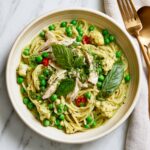
Easy Green Curry Spaghetti
- Total Time: 35 minutes
- Yield: 4 1x
- Diet: Gluten-Free
Description
Need a new idea for a pasta night meal that’s quick and easy and flavor packed? Thai Green Curry Chicken Spaghetti is here for you dear!
Ingredients
- 8oz. spaghetti noodles, or pasta of choice
- 2–3 tbsp Thai green curry paste
- 1 tbsp cooking oil
- 1 can (13.5 oz) coconut milk
- 1 lb boneless, skinless chicken breasts, thinly sliced into bite-sized pieces
- 2 cups cauliflower, cut into small florets, or veggie of choice
- 1 cup frozen or fresh green peas, or veggie of choice
- 1–2 tbsp fish sauce, to taste
- 2 tsp sugar, to taste
- 1/2 cup fresh Thai basil leaves
- 1/2 cup fresh cilantro, roughly chopped
- 2 makrut lime leaves, stems removed and finely slivered (optional)
Instructions
- Step 1: Cook the spaghetti
- Cook 8oz spaghetti noodles or pasta of choice according to the package directions until al dente. Before draining, reserve 1 cup pasta cooking water in case you want to loosen the sauce later. You may not need it though.
- While the noodles cook, get your curry going. Have the chicken and vegetables cut before you start so everything is ready to hop into the pan!
- Step 2: Fry the curry paste
- Heat 1 tbsp cooking oil in a large, deep skillet, wok, or wide pot over medium heat. Add 2-3 tbsp Thai green curry paste and stir until it blends into the oil and smells fragrant, about 1 minute.
- Step 3: Add the chicken
- Add 1 lb thinly sliced chicken breasts and stir to coat the pieces in the curry paste. Cook, stirring, until the outside turns opaque. The chicken will finish cooking in the sauce.
- Step 4: Simmer the vegetables and coconut milk
- Stir in 2 cups of cauliflower, cut into small florets (or veggies of choice), 1 cup of frozen or fresh green peas, (or veggies of choice) and 1 can (13.5 oz) coconut milk.
- Bring to a gentle simmer, then reduce the heat as needed. Stir occasionally until the vegetables are tender-crisp and the chicken is cooked through.
- If the pan looks dry before the vegetables are ready, add a little of the reserved pasta cooking water, a splash at a time. You want enough liquid to help everything cook without turning the sauce watery. Cover briefly if the vegetables need help softening.
- Step 5: Taste, season, and serve
- Once the chicken is cooked, stir in 1 tbsp fish sauce and 1 tsp sugar. Taste, then add more fish sauce and sugar, as needed.
- Want more heat and haven’t used that last tablespoon of paste? Stir the more Thai green curry paste into a little hot sauce to loosen it, return it to the pan, and simmer for a few minutes before tasting again.
- Add 1/2 cup fresh Thai basil leaves (or Italian basil) and stir in after turning off the heat so the leaves gently wilt and keep their fragrance.
- Divide the cooked spaghetti among bowls and spoon the chicken, vegetables, and curry sauce over the top. Sprinkle with 1/2 cup roughly chopped cilantro and the optional 2 finely slivered makrut lime leaves, divided among the bowls.
Notes
Additions and Substitutions
- Spaghetti substitute: Linguine, fettuccine, bow tie, penne, bean thread noodles, egg noodles, or rice noodles.
Chicken breast substitute: Boneless chicken thighs, shrimp, tofu or beef.
Cauliflower and green peas substitutes: Broccoli, zucchini, bell peppers, peas, mushrooms, or a mix. Add quicker-cooking vegetables later so they don’t turn mushy.
Fish sauce substitute: 1/2 tbsp soy sauce + 1/2 tbsp vinegar of choice (except balsamic) + a pinch of salt, or coconut aminos.
Cilantro substitute: Thai basil, or leave it off if cilantro isn’t your thing.
Thai Basil substitute: Holy basil, or Italian basil, or leave it out.
Makrut lime leaf substitute: A little finely grated lime zest gives a different citrus note, or simply omit the leaves.
Tips for the Best Green Curry Spaghetti
- Cut the cauliflower small. Big florets take longer to soften, and the chicken can dry out while you wait for them.
Start gently with the heat. Two tablespoons of one curry paste may be much hotter than two tablespoons of another. You can add more, but you can’t scoop it back out!
Taste before adding all the fish sauce. The curry paste brings salt too. You want savory and balanced, not a salt lick!
Keep noodles and curry separate for leftovers. That helps keep the pasta from soaking up all the sauce before tomorrow’s lunch.
- Prep Time: 20 minutes
- Cook Time: 15 minutes
- Category: Dinner
- Method: Stir-Fry
- Cuisine: Thai
This post contains links to affiliate websites, such as Amazon, and I receive an affiliate commission for any purchases made by you using these links. I appreciate your support!


What a delightful blog. Our son lives on Phuket with his Thai wife and is loving the food and her.
We are just learning about Thai food and culture and are addicted to both. I will be visiting your blog often.
Such great sounding recipes.
Thank you for your enthusiasm, and sharing spirit.
Thanks so much for your comment Jeanie! I love that you all are now addicted to Thai food and culture thanks to your dear son and his wife! It’s my pleasure to share my stories and recipes with you all and help you connect even more with your Thai daughter-n-law!
Thank you so much for the recipe! It’s such a good combination of Thai and pasta dish. How lovely!
So glad you enjoyed it Lizzy! Thanks for your kind words!
Love using this as a quick weeknight dinner I can bring anywhere!