
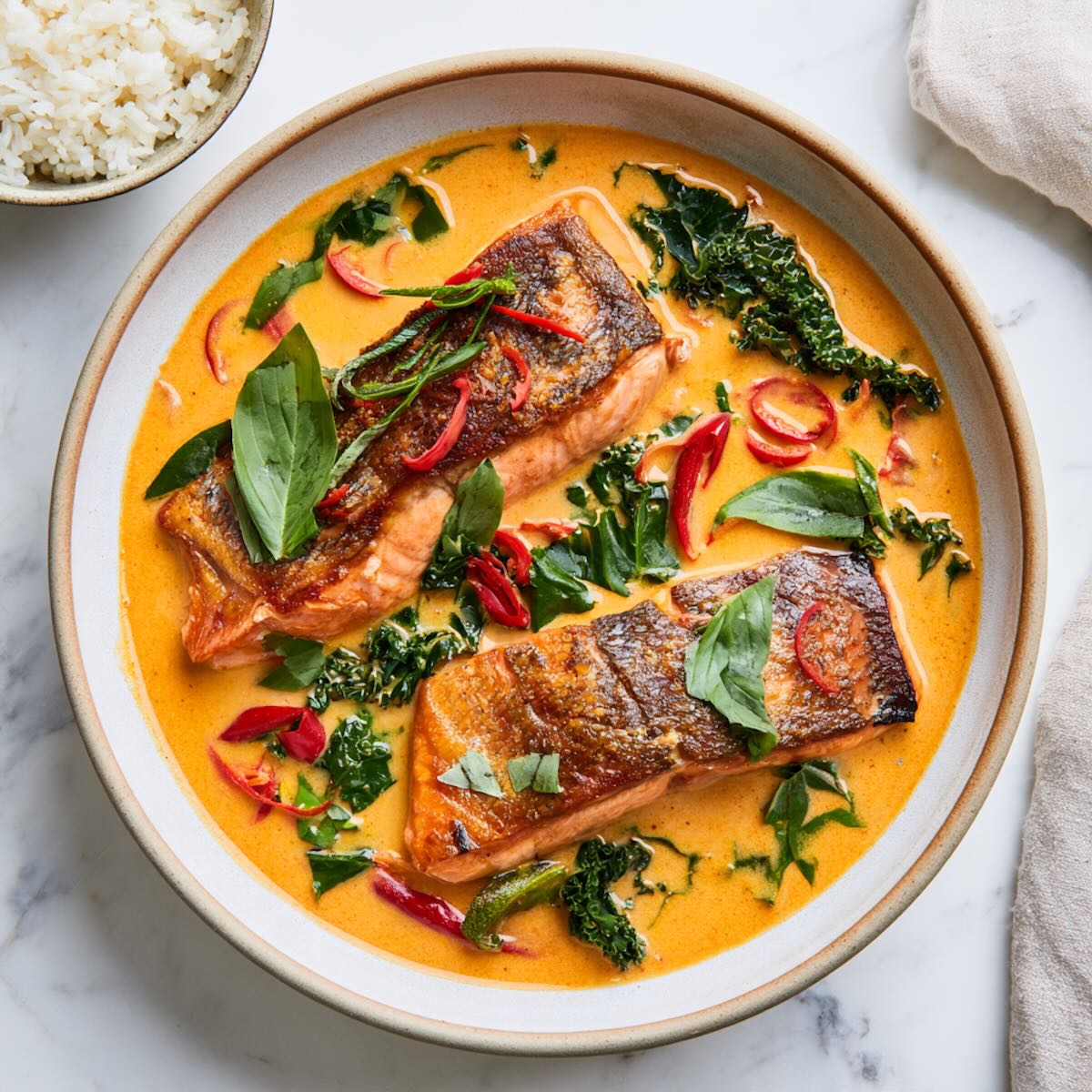
Craving a super easy but fancy feeling cozy Thai dinner with tender salmon paired with a rich, flavorful red curry sauce? You need to make Salmon Choo Chee Curry today dear!
What Is Choo Chee Curry?
This Salmon Choo Chee Curry brings it all to the table! Sear the salmon until the skin is crispy, then make a thick, creamy curry sauce in the same skillet. Spoon it over the salmon, serve it with jasmine rice, and dinner is fun and uncomplicated!
The name “Choo chee” comes from the sizzling sound the coconut cream and curry paste make as they cook together in the pan. Don’t you love how Thais name dishes based on the sound they make? So fun!
It’s made with red curry paste, coconut milk, fish sauce, sugar, makrut lime leaves and I like to throw in kale since Thai Hubby likes it, but that’s not traditional. The sauce is rich and thick, with a balance of savory, sweet, spicy, and citrusy flavors.
Unlike a soupy Thai curry, Choo Chee Curry sauce is usually reduced until it’s thicker, and the fish is cooked separately and the sauce is spooned over it. This recipe uses salmon, which is always a hit in our house with our kids, and goes perfectly with the creamy curry.
Why You’ll Love This Salmon Choo Chee Curry Recipe
- Learn from a Thai cooking class teacher: I’ll walk you through the steps so you can make it with confidence.
- Easy for a weeknight: Sear the salmon, make the flavorful curry sauce in the same skillet, and dinner is ready in less than 30 minutes!
- A little green with dinner: Kale wilts right into the sauce, so there’s one less side veggie dish to think about.
Salmon Choo Chee Curry Ingredients You’ll Need
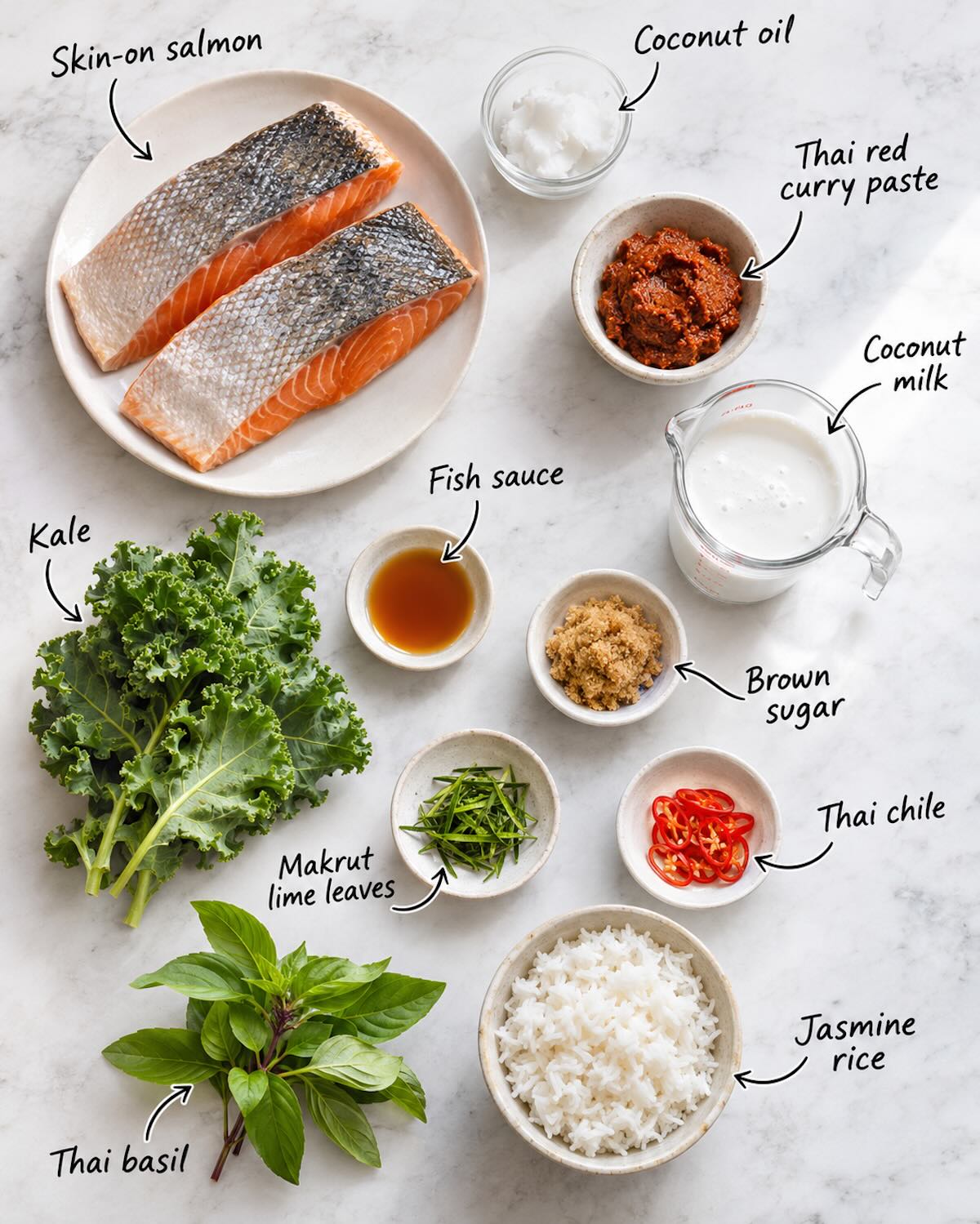
- 1½ pounds skin-on salmon fillets, or fish of choice – Choose fillets that are similar in thickness so they cook at about the same rate.
- 2–3 tablespoons coconut oil or neutral cooking oil, divided – To sear the salmon and a little more if the skillet looks dry when you start the sauce.
- 2 tablespoons Thai red curry paste – Gives the sauce its color, and bold curry flavor. Use 1 tablespoon for a milder sauce.
- 1 (13.5-ounce) can full-fat coconut milk, not shaken – The thick coconut cream at the top of the can helps create a rich sauce. You’ll use the top cream first, then stir in the rest of the coconut milk. It’s ok if your can doesn’t have it though!
- 2–3 teaspoons fish sauce, to taste – Adds the savory, salty, umami depth.
- 1–2 teaspoons brown sugar, to taste – Balances the heat and saltiness.
- 2 cups fresh kale leaves (optional) – Not traditional, but Thai Hubby loves it for some added extra greens!
- 4 fresh makrut lime leaves, thinly sliced (optional) – Their bright, citrusy flavor is one of my favorite parts of choo chee.
- 1 fresh Thai chile, thinly sliced (optional) – Add it for extra heat and extra pretty factor.
- A handful of Thai basil leaves (optional) – Adds a fresh, fragrant finish.
- Jasmine rice, for serving – Perfect for soaking up that creamy curry sauce.
How to Make Salmon Choo Chee Curry
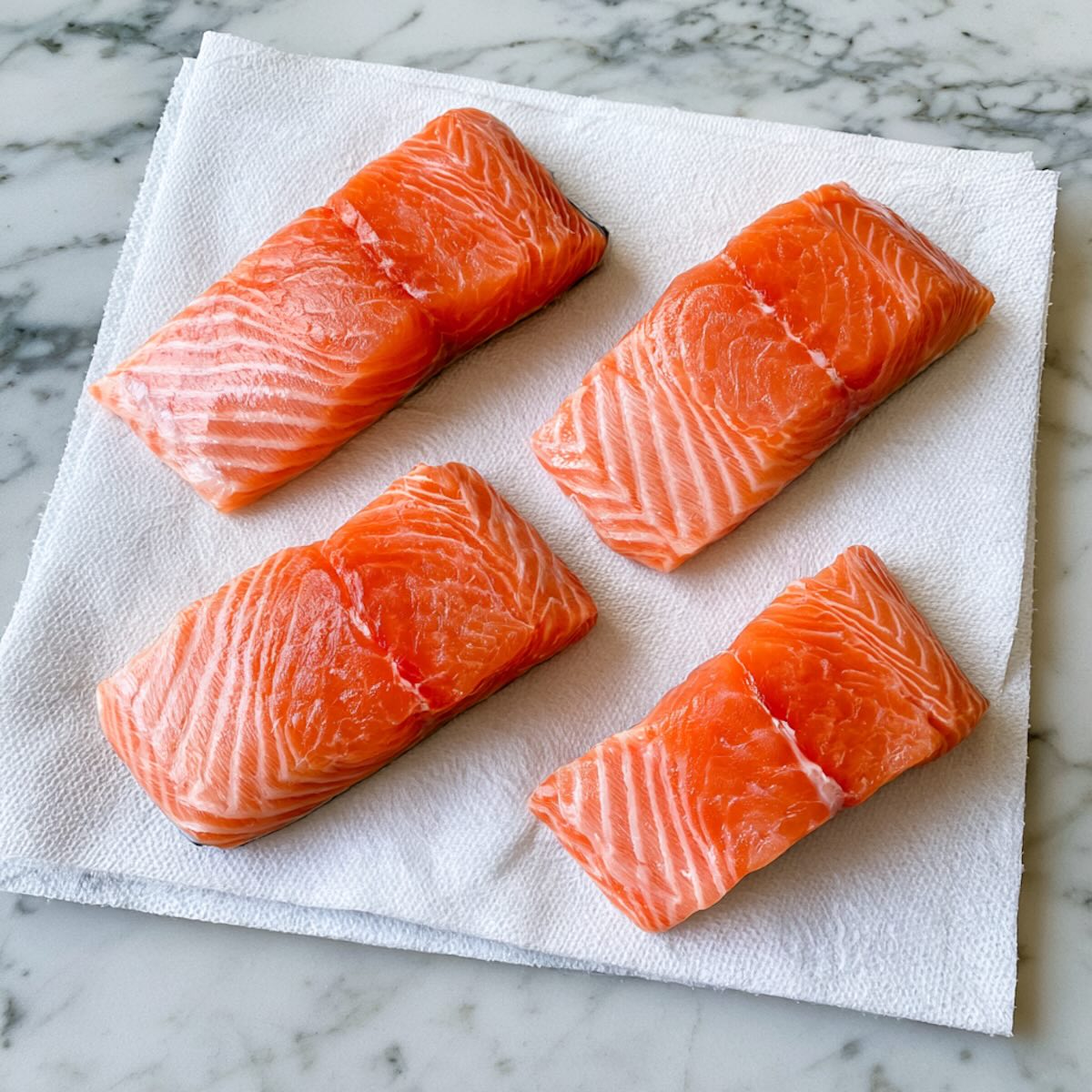
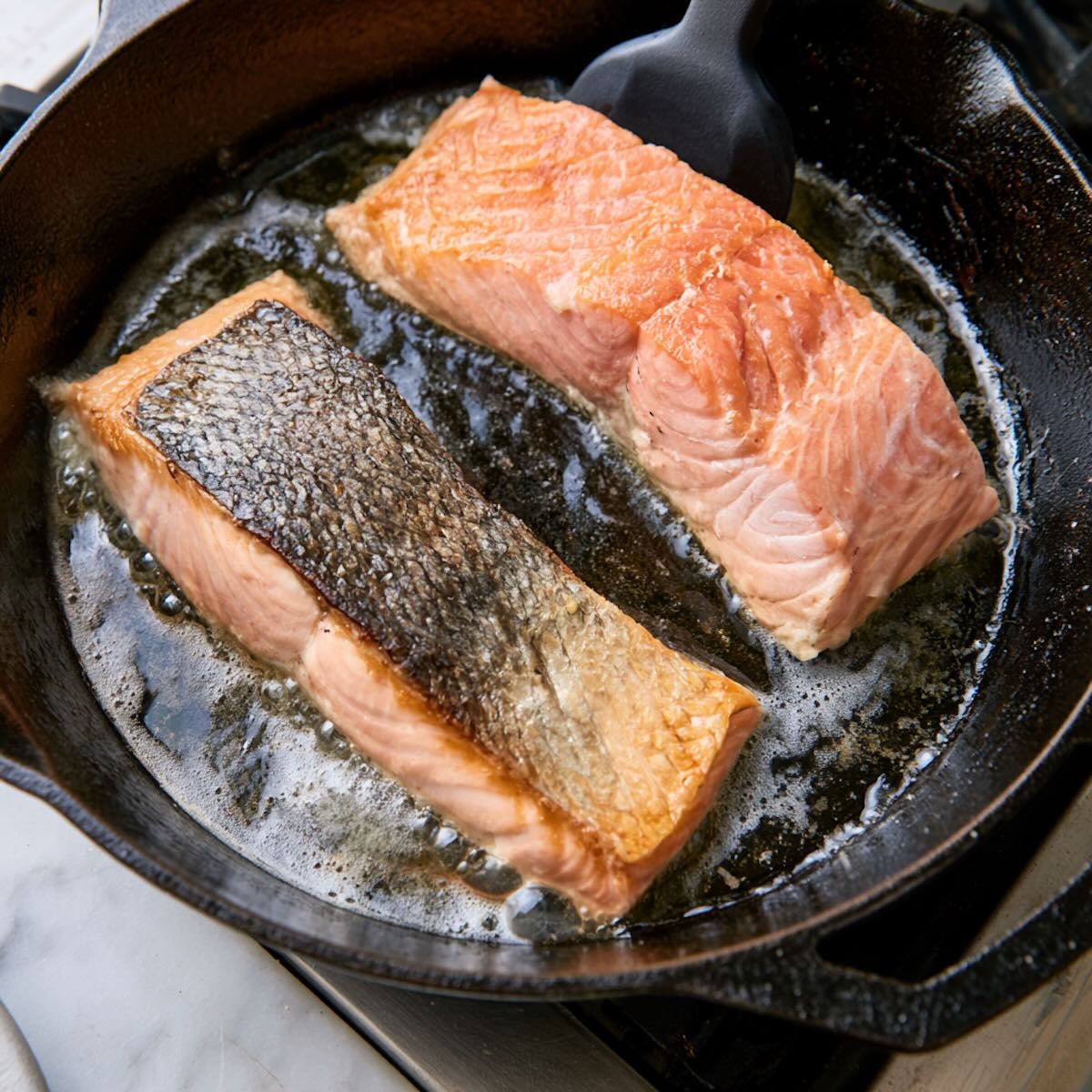
Step 1: Pat the salmon dry
Use paper towels to pat 1½ pounds skin-on salmon fillets very dry, especially the skin. Dry skin helps it brown and crisp in the skillet. Let the salmon sit at room temperature for about 10 minutes while you prepare the other ingredients.
Step 2: Sear the salmon
Heat 1 tablespoon coconut oil or neutral cooking oil in a cast-iron skillet over medium-high heat until shimmering. Carefully place the salmon in the skillet skin-side down. Press gently with a spatula for a few seconds if the fillets start to curl, then leave them in place so the skin can crisp.
Cook skin-side down until the skin is crisp and the sides of the salmon turn from deep pink to a lighter, pale pink about two-thirds of the way up. The salmon should release from the pan fairly easily when it’s ready to flip. Turn it over and cook for another minute or two, depending on thickness.
For the most reliable check, insert an instant-read thermometer into the thickest part of a fillet. USDA guidance recommends cooking fish to 145°F, but some people prefer salmon cooked less, around 125–130°F, for a more tender texture. You do you!
Transfer the salmon to a plate while you make the sauce. Keep the crispy skin facing up.
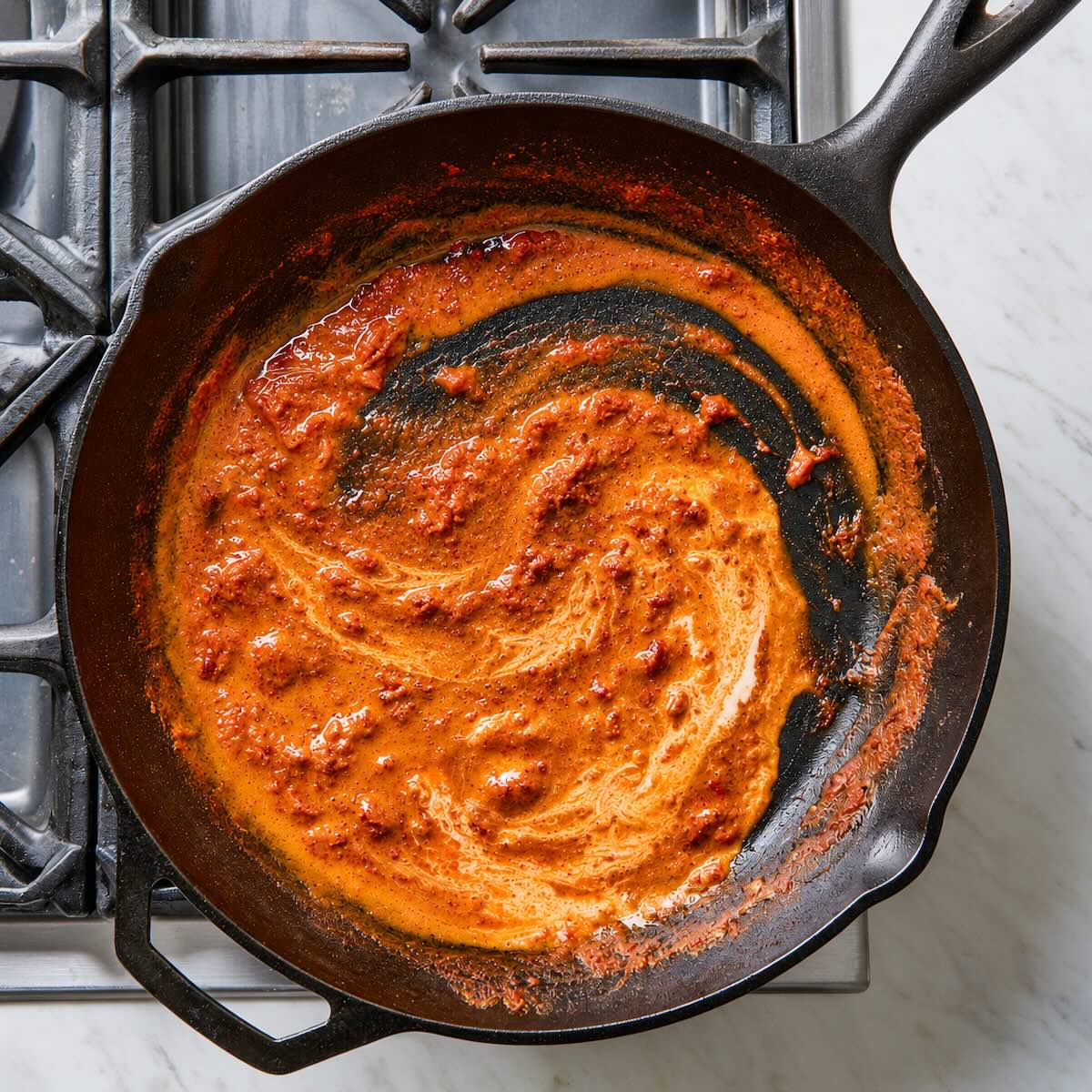
Step 3: Fry the curry paste in coconut cream
Lower the heat to medium. If the skillet looks dry, add a little more oil.
Scoop the thick coconut cream from the top of the 1 (13.5-ounce) can coconut milk into the skillet.
Add 2 tablespoons Thai red curry paste and stir for 1–2 minutes, until fragrant. If your coconut milk doesn’t have a thick layer on top, no worries. Just stir-fry the curry paste in the oil until fragrant.
Step 4: Make the choo chee sauce
Stir in the remaining coconut milk, 2 teaspoons fish sauce, and 1 teaspoon brown sugar.
Simmer for a few minutes, stirring, until the curry paste is fully mixed in and the sauce thickens enough to coat a spoon. Taste and add more fish sauce or brown sugar if you’d like.
Step 5: Wilt the kale
If using, stir 2 cups kale leaves into the sauce and cook for 1–2 minutes, just until wilted. If the sauce becomes thicker than you like, loosen it with a small splash of coconut milk.
Step 6: Serve
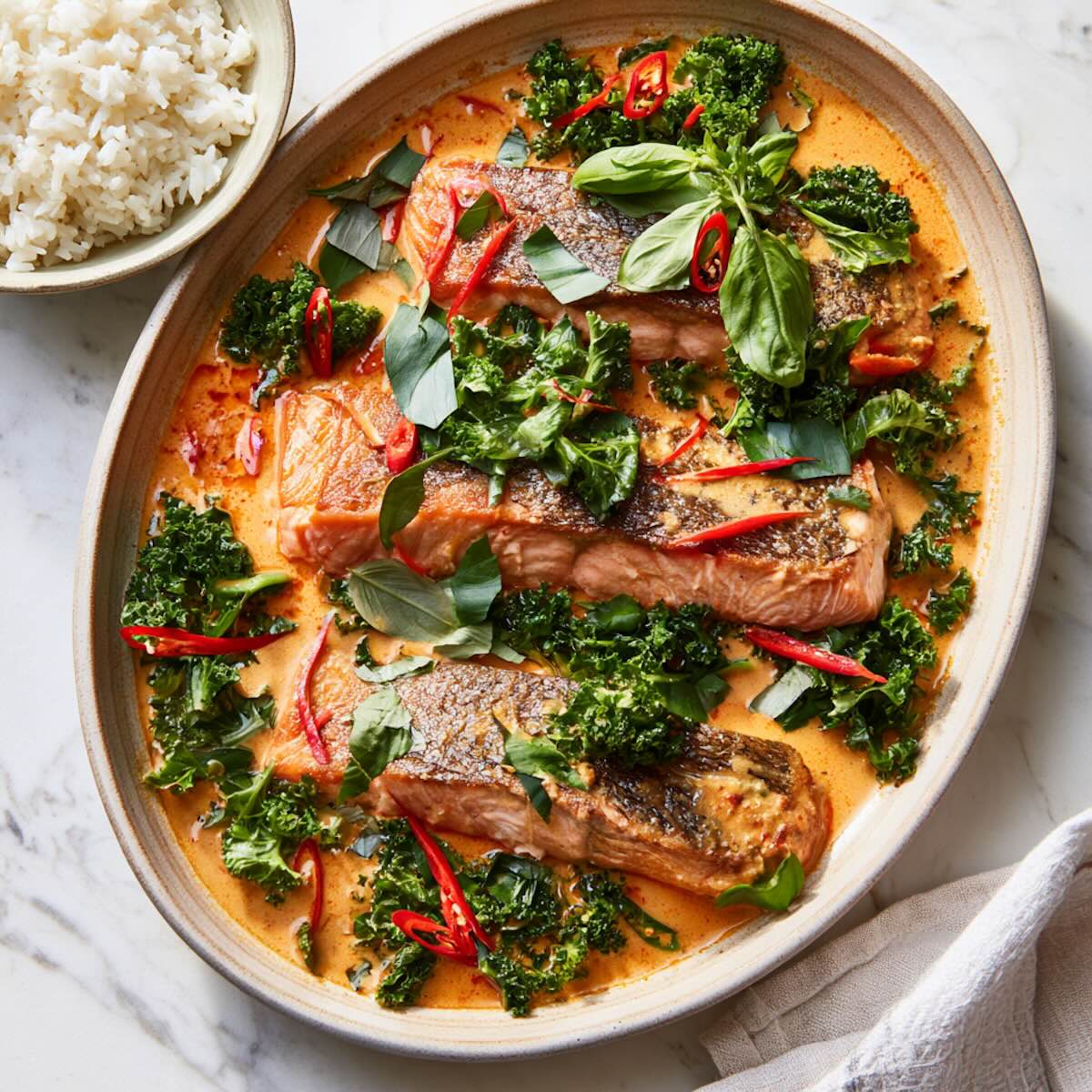
Spoon the sauce and kale onto plates or into a serving dish.
Place the salmon on top or beside the sauce, keeping the crispy skin uncovered. Sprinkle with makrut lime leaves, Thai chile, and Thai basil, if using. Serve with jasmine rice and enjoy!
Additions and Substitutions
- Salmon substitute: Another firm fish, such as cod, snapper, or halibut.
- Red curry paste substitute: Panang Curry Paste
- Fish sauce substitute:1/2 tbsp soy sauce + 1/2 tbsp vinegar of choice (except balsamic) + a pinch of salt, or coconut aminos.
- Coconut milk substitute: the same amount of heavy cream, or milk of choice.
- Brown sugar substitute: White sugar or palm sugar.
- Kale substitute: leave it out, or spinach or another tender green.
- Makrut lime leaf substitute: Leave it out if you can’t find it.
- Thai chile substitute: Use red bell pepper strips for a milder dish, or serve my Thai Flavor Bomb Sauce, aka Prik Nam Pla, on the side so everyone can add heat to their own plate.
Tips for the Best Salmon Choo Chee Curry
- Dry the salmon skin well. Water on the skin can keep it from crisping.
- Watch the heat. If the skin is browning too quickly before the fish cooks, turn the burner down.
- Taste the sauce before adding more fish sauce. Curry paste and fish sauce brands vary in saltiness. Start with 2 teaspoons, then adjust after the sauce simmers.
- Protect that crispy skin. Spoon the sauce underneath or beside the salmon, or drizzle it over the flesh side. Covering the skin with sauce will soften the crispiness.
Behind the Salmon Choo Chee Curry Recipe

Before I went to Thailand, the farthest my seafood palate extended was fried fish sticks since most American seafood tasted fishy and bland to me, eww!
But once I hit the streets of Bangkok, I loved trying any Thai food placed in front of me, especially Thai seafood dishes.
Instead of just using boring lemon, butter, cocktail or tartar sauce like a lot of seafood dishes found in America, Thai fish, shrimp and crab dishes can be jam-packed with flavors like: zesty lime, crunchy shallots, fresh mint, Thai basil, green onions, cilantro, tons of garlic, roasted rice powder, Thai curry pastes, and of course spicy Thai chilies.
My love for Thai seafood wasn’t powerful enough to handle any of my four pregnancies though. The smell of any fish made me sick, even when I was pregnant during our visit to Thailand one summer!
So tragic and sad, I can’t even begin to tell you. But once I wasn’t pregnant, I craved yet again Thai fish dishes like Choo Chee Curry! It’s one of my Thai Hubby’s favorite dish, and mine too!
Not only because it’s so full of flavor, but it takes less than 30 minutes from prep to table, and with four sweet kiddos, quick Thai meals make life even sweeter!
Salmon Choo Chee Curry Frequently Asked Questions
Choo Chee sauce is made with Thai red curry paste, coconut cream, fish sauce, and a little sugar. Makrut lime leaves add a bright, citrusy finish.
It’s rich and creamy, with spicy, savory, and slightly sweet flavors. Makrut lime leaves give it a fresh citrusy aroma.
It can be, but the heat depends on your curry paste and how much you use. Start with 1 tablespoon for a milder sauce or use 2 tablespoons for a more noticeable curry flavor. Taste before adding more.
Yes. You can gently simmer the salmon in the sauce until it’s cooked through. For this recipe, I sear the salmon separately to crisp the skin, then spoon the sauce under it.
You can make the sauce ahead and reheat it gently. For the best texture, cook the salmon just before serving so its skin stays crisp.
They share red curry paste and coconut milk, but Choo Chee is usually thicker and richer, with the sauce spooned over fish or seafood. Red curry is typically thinner and simmers with its ingredients.
Want other Thai curry recipes?
If you loved this Thai Salmon Curry, here are a few more cozy Thai curry recipes to try next!
- Hor Mok: Thai Red Curry Fish Custard – A soft, savory Thai steamed red curry custard made with coconut milk, fish of choice, Thai basil, and makrut lime leaves.
- Panang Curry Paste Recipe – The flavor-packed base for so many bold, cozy Thai curry recipes.
- Beef Panang Curry – Rich, creamy, nutty, and one of my favorite comforting Thai curries.
- Massaman Curry Paste – A warm, cozy Thai curry paste full of fragrant spices that’s perfect for rich curries.
Let’s Stay Connected Dear!
And if you want to learn how to make it in person, come join one of my Thai cooking classes in Boone, NC!
Love learning Thai kitchen tips? Sign up for my Thai-Foodie Substack newsletter and get my free Substitution Hacks Guide download, your cheat sheet for swapping Thai ingredients no matter where you live!
If you make it, I want to see! Take a pic and tag me on Instagram @thaifoodie!
Print
Salmon Choo Chee Curry | Thai Red Curry Salmon
- Total Time: 22 minutes
- Yield: 4 1x
- Diet: Gluten-Free
Description
Salmon Choo Chee Curry is the perfect weeknight meal since it’s full of flavor and takes less than 30 minutes! Salmon, kale, Thai red curry paste, and coconut milk! Can it get more delicious??
Ingredients
- 1 1/2 pounds skin-on salmon fillets, or fish of choice
- 2–3 tablespoons coconut oil or neutral cooking oil, divided
- 2 tablespoons Thai red curry paste (use 1 tablespoon for a milder sauce)
- 1 (13.5-ounce) can full-fat coconut milk, not shaken
- 2–3 teaspoons fish sauce, to taste
- 1–2 teaspoons brown sugar, to taste
- 2 cups fresh kale leaves (optional)
- 4 fresh makrut lime leaves, thinly sliced (optional)
- 1 Thai fresh chile, thinly sliced (optional)
- A handful of Thai basil leaves (optional)
- Jasmine rice, for serving
Instructions
Step 1: Pat the salmon dry
- Use paper towels to pat 1½ pounds skin-on salmon fillets very dry, especially the skin. Dry skin helps it brown and crisp in the skillet. Let the salmon sit at room temperature for about 10 minutes while you prepare the other ingredients.
Step 2: Sear the salmon
- Heat 1 tablespoon coconut oil or neutral cooking oil in a cast-iron skillet over medium-high heat until shimmering. Carefully place the salmon in the skillet skin-side down. Press gently with a spatula for a few seconds if the fillets start to curl, then leave them in place so the skin can crisp.
- Cook skin-side down until the skin is crisp and the sides of the salmon turn from deep pink to a lighter, pale pink about two-thirds of the way up. The salmon should release from the pan fairly easily when it’s ready to flip. Turn it over and cook for another minute or two, depending on thickness.
- For the most reliable check, insert an instant-read thermometer into the thickest part of a fillet. USDA guidance recommends cooking fish to 145°F, but some people prefer salmon cooked less, around 125–130°F, for a more tender texture. You do you!
- Transfer the salmon to a plate while you make the sauce. Keep the crispy skin facing up.
Step 3: Fry the curry paste in coconut cream
- Lower the heat to medium. If the skillet looks dry, add a little more oil. Scoop the thick coconut cream from the top of the 1 (13.5-ounce) can coconut milk into the skillet.
- Add 2 tablespoons Thai red curry paste and stir for 1–2 minutes, until fragrant. If your coconut milk doesn’t have a thick layer on top, no worries. Just stir-fry the curry paste in the oil until fragrant.
Step 4: Make the choo chee sauce
- Stir in the remaining coconut milk, 2 teaspoons fish sauce, and 1 teaspoon brown sugar. Simmer for a few minutes, stirring, until the curry paste is fully mixed in and the sauce thickens enough to coat a spoon. Taste and add more fish sauce or brown sugar if you’d like.
Step 5: Wilt the kale
- If using, stir 2 cups kale leaves into the sauce and cook for 1–2 minutes, just until wilted. If the sauce becomes thicker than you like, loosen it with a small splash of coconut milk.
Step 6: Serve
- Spoon the sauce and kale onto plates or into a serving dish. Place the salmon on top or beside the sauce, keeping the crispy skin uncovered. Sprinkle with makrut lime leaves, Thai chile, and Thai basil, if using. Serve with jasmine rice and enjoy!
Notes
Additions and Substitutions
Salmon substitute: Another firm fish, such as cod, snapper, or halibut.
Red curry paste substitute: Panang Curry Paste
Fish sauce substitute:1/2 tbsp soy sauce + 1/2 tbsp vinegar of choice (except balsamic) + a pinch of salt, or coconut aminos.
Coconut milk substitute: the same amount of heavy cream, or milk of choice.
Brown sugar substitute: White sugar or palm sugar.
Kale substitute: leave it out, or spinach or another tender green.
Makrut lime leaf substitute: Leave it out if you can’t find it.
Thai chile substitute: Leave it off for a milder dish, or serve my Thai Flavor Bomb Sauce, aka Prik Nam Pla, on the side so everyone can add heat to their own plate.
Tips for the Best Salmon Choo Chee Curry
Dry the salmon skin well. Water on the skin can keep it from crisping.
Watch the heat. If the skin is browning too quickly before the fish cooks, turn the burner down.
Taste the sauce before adding more fish sauce. Curry paste and fish sauce brands vary in saltiness. Start with 2 teaspoons, then adjust after the sauce simmers.
Protect that crispy skin. Spoon the sauce underneath or beside the salmon, or drizzle it over the flesh side. Covering the skin with sauce will soften the crispiness.
Hey dear! If you make this recipe and love it, would you leave a quick comment and rating? Your reviews help other readers discover the recipes that build connection around the table. Thank you so much!
- Prep Time: 2 minutes
- Cook Time: 20 minutes
- Category: Dinner
- Method: Frying
- Cuisine: Thai
This post contains links to affiliate websites, such as Amazon, and I receive an affiliate commission for any purchases made by you using these links. I appreciate your support!


Delicious and super simple to prepare. Thank you!
So glad you enjoyed it Lisa!
In the picture it shows basil and I do not see any kale? Kale seems odd for Thai food.
I think that’s Thai basil?
Looks yummy and I want to try it!
Thai Hubby likes when I put kale in because he likes extra veggies, but you are correct! It’s not traditional, so feel free to leave it out. Thai basil is traditionally added though, so sprinkle away! I hope you enjoy it!
Can spinach be substituted for Kale or would it add too much water?
Thanks for your comment Kathy! Yes, spinach can work as a substitute for kale. Just stir it in during the last 30 seconds or after turning off the heat, and it should be perfect. It will shrink, and it can release a little extra moisture, but it shouldn’t water down the sauce too much if you don’t overcook it.
Adore how quick and easy this is on a weeknight! And tons of flavor too! Thanks for sharing!