Description
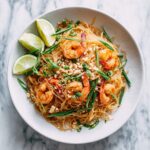
Make authentic Woon Sen Pad Thai at home with refreshing glass noodles, tangy tamarind sauce, and all the Thai street food flavor you love!
Ingredients
Noodles
-
16 oz. glass noodles (woon sen)
Pad Thai Sauce
-
½ of a tamarind block or ¾ cup tamarind concentrate
-
¾ cup palm sugar, finely chopped
-
¾ cup brown sugar
-
⅓–½ cup fish sauce
-
½ cup water
Stir-Fry Ingredients
-
4–6 tablespoons coconut oil (or oil of choice)
-
6 garlic cloves, minced
-
2 shallots, finely chopped (optional)
-
4 servings shrimp, peeled and deveined
-
4 eggs, beaten
-
2 cups fried tofu or extra firm tofu strips (optional)
-
1.5 cup fresh green onions (1 bunch) or garlic chives, cut into 2-inch pieces
-
2 cups fresh bean sprouts
-
¼ cup preserved radish, chopped (optional)
Toppings
-
Sugar
-
Crushed peanuts
-
Lime wedges
-
Extra bean sprouts and garlic chives
Instructions
Soak 16 oz. of glass noodles in room-temperature water for 15–20 minutes, just until soft and flexible. Drain and set aside.
If using ½ of a tamarind block, cover it in about 1 cup of warm water for 10 minutes to soften. Then press the pulp through a fine-mesh colander using a spatula or spoon, scraping the paste from the underside of the colander. Discard the seeds and fibers.
For the traditional Thai method, which is what I do, you can use your hands to squeeze out the pulp, make a paste, and throw away the seeds and fibers.
Measure out ¾ cup of the paste. Or, if you prefer the easiest route, use ¾ cup jarred tamarind concentrate.
Add the tamarind paste to a small pot with ¾ cup palm sugar, ¾ cup brown sugar, and ⅓ to ½ cup fish sauce. Start with ⅓ cup fish sauce, which is what most of my American cooking class students prefer, then add more to taste if you like it saltier. Stir over medium heat until the sugars dissolve. Taste and adjust as needed — more fish sauce for salty, more tamarind for sour, or more sugar for sweet.
Important note: Only cook two servings of noodles at a time, so they do not get gummy from too much moisture. You will do this recipe in two batches.
To help keep the noodles from clumping, I like to cook the protein separately and set it aside. Heat 2 to 3 tablespoons coconut oil over medium high heat in a large cast iron skillet or wok. Add 3 garlic cloves, minced and 1 shallot, minced (optional), stirring until fragrant. Add all the shrimp (4 servings) and cook just until pink. Remove immediately to keep them tender, then set aside.
Make sure everything is prepped and close to the stove since these next steps go quickly.
Turn the heat to high, add 2 tbsp or so of oil if needed, and toss in a little more garlic. Add 2 beaten eggs and scramble until set.
Add soaked glass noodles and a ladle of sauce, tossing quickly with tongs to coat evenly. Add more sauce gradually as noodles soften and absorb flavor.
Once noodles are soft, add 1 cup fried tofu strips (optional), half the cooked shrimp, 3/4 cup green onions or garlic chives, cut into 2-inch pieces, 1 cup fresh bean sprouts, and 2 tablespoons pickled radish (optional). Toss quickly, then turn off the heat.
Repeat with the second batch. You might have some extra sauce left over. Store it in a jar in the fridge for up to 2–3 weeks, or freeze it for up to 3 months. Just give it a stir before using again.
Serve immediately with lime wedges, peanuts, extra sprouts, and chili flakes on the table.
Notes
Additions and Substitutions
- Glass noodle substitute: Korean sweet potato noodles, rice noodles, or even spaghetti (al dente).
- Shrimp substitute: Chicken Pad Thai, Beef Pad Thai, Thai fried tofu, or pork.
- Fish sauce substitute: 2½ tbsp soy sauce + 2½ tbsp vinegar + pinch of salt for ⅓ cup fish sauce. For a vegan version that uses a miso-based fish sauce substitute, see my Vegan Pad Thai post.
- Bean sprouts substitute:Fresh green beans cut into 2-inch pieces. Thai Hubby is from Sukhothai and they always put green beans in their Pad Thai in that area, so often we just use green beans since where we leave it can be hard to find fresh bean sprouts.
- Tamarind substitute: ½ cup rice vinegar + ¼ cup lime juice.
- Palm sugar substitute: Extra brown sugar.
- Less sugar: Prefer less sugar? Start with half the sugar, then taste and adjust. Authentic Pad Thai balances sweet, sour, salty, and savory, and this sauce is for 6 servings, so the sweetness is spread out and balanced by tamarind and fish sauce. Try it as written first, then tweak if needed, or add more fish sauce as mentioned in the recipe.
- Dried shrimp (optional): Many Pad Thai vendors in Thailand add tiny dried shrimp for extra umami. I used to always skip them, but now I enjoy the depth of flavor they bring, but often can’t find them in America. If you find some, try adding a tablespoon or two to the stir-fry with the garlic.
Tips for the Best Woon Sen Pad Thai
- Make ahead: The Pad Thai sauce and veggies can be prepped a day or two in advance. Store the sauce in the fridge and chopped veggies in containers, then stir-fry everything fresh when you’re ready to eat and it only takes a few minutes!
- Use a large cast iron skillet or wok so the noodles cook evenly and don’t steam too much. A wide surface area keeps them springy instead of soggy.
- Cook noodles in small batches to prevent clumping.
- Don’t over-soak the glass noodles — they only need to be flexible, not fully soft before stir-frying.
- Add sauce gradually — too much at once makes noodles soggy.
- Let everyone add their own toppings for a true Thai street food experience.
- Prep Time: 15
- Cook Time: 15
- Category: Noodles
- Method: Stir-Fry
- Cuisine: Thai