
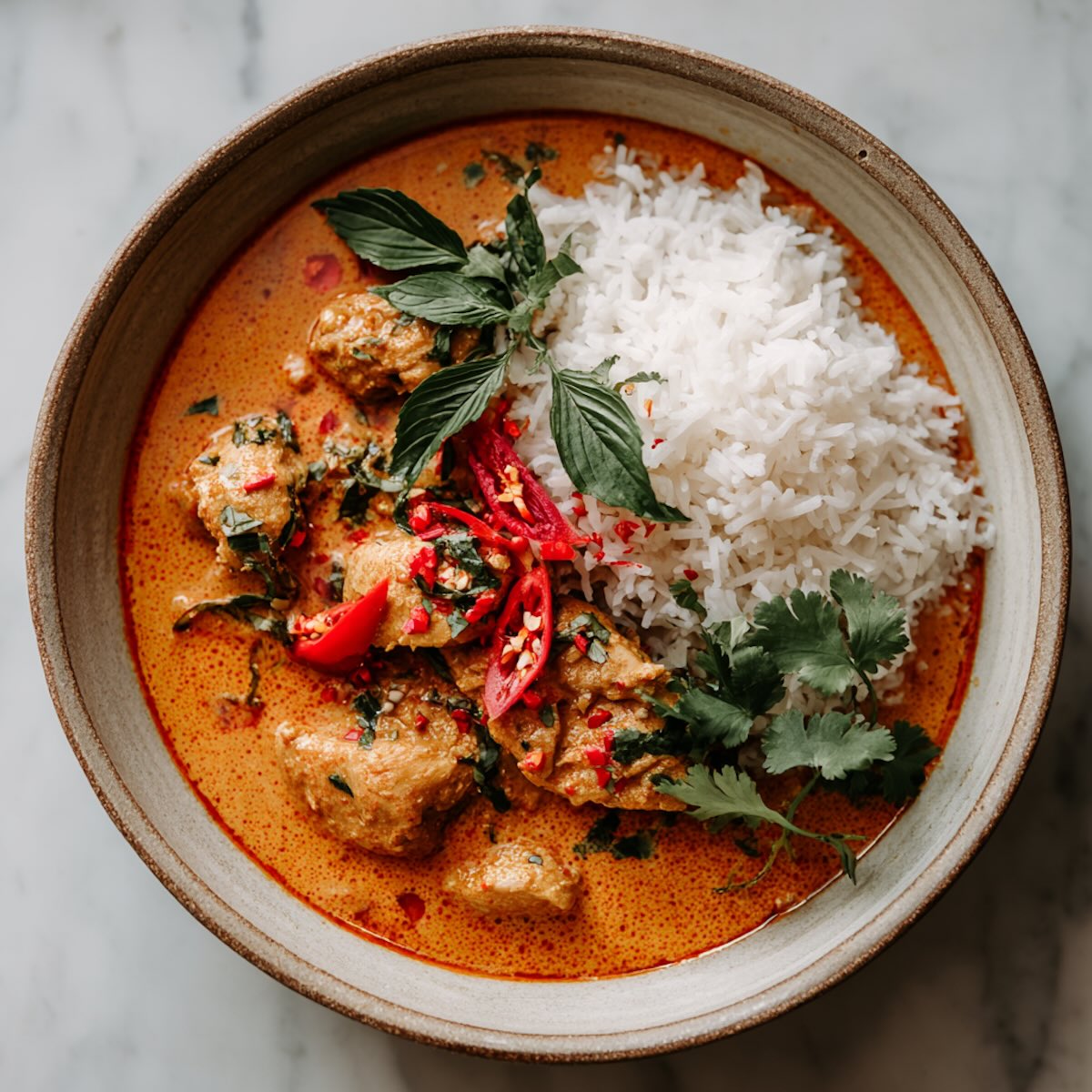
Craving a rich, creamy, bold Chicken Panang Curry that tastes like your favorite Thai restaurant, but is easy enough to make at home on a weeknight?
This chicken Panang curry is your answer! It’s cozy, coconutty, savory-sweet, just a little spicy, and loaded with those classic Thai Panang flavors that make you want to close your eyes after the first bite and say, “This is soooo gooood!”
What Is Chicken Panang Curry?
Panang curry is one of those Thai dishes that feels fancy, but once you understand the flow, it’s actually so doable. You fry the curry paste until fragrant, stir in creamy coconut milk, cook the chicken until tender, then finish it with fish sauce, palm sugar, makrut lime leaves, Thai chilies, and Thai basil.
In Thailand, Panang is often made with beef, pork, or chicken and served with fresh jasmine rice. It’s one of those curries that feels comforting and special at the same time, which is exactly why I love teaching it in my Thai cooking classes!
Simple ingredients. Big Thai flavor. Let’s make it dear!
Why You’ll Love This Recipe
- Authentic Thai flavor taught to you by a Thai cooking class instructor
- Easy enough for a weeknight, but special enough for guests
- Ready in about 30 minutes
- Perfect with jasmine rice for a cozy Thai dinner at home
Chicken Panang Curry Ingredients You’ll Need

- 1–2 tbsp coconut oil, or oil of choice that can handle high heat – Helps fry the curry paste and bring out all its flavor.
- 2–3 tbsp Thai Panang curry paste, homemade using my recipe, or Mae Ploy brand – The flavor base of the whole dish. Start with less if you’re spice-sensitive, and add more if you like it bold!
- 1 13.5 ounce can coconut milk – Makes the curry creamy, rich, and silky. Use full-fat coconut milk if you want the best texture.
- 2 lb chicken thighs or chicken breasts, thinly sliced or cut into bite-sized pieces – Chicken thighs stay juicy and tender, but chicken breasts work too if that’s what you have.
- 2–3 tbsp palm sugar – Adds that gentle Thai sweetness that balances the curry paste and fish sauce.
- 1–2 tbsp fish sauce – Salty, savory, umami magic.
- 3 makrut lime leaves, thinly slivered – They add that bright, citrusy Thai aroma that makes Panang curry so amazing.
- 1–2 Thai fresh chilies, thinly slivered – Adds pretty color and extra heat. Use as much or as little as your spice-loving heart can handle.
- A handful of Thai basil leaves, optional – For sprinkling on top at the end because fresh herbs make everything happier and prettier.
How to Make Chicken Panang Curry
Step 1: Warm your pan
Warm a wok or large frying pan over medium heat. Once warm, add 1–2 tbsp coconut oil or oil of choice.
Step 2: Start the coconut milk
Open your can of 13.5 ounce coconut milk and scoop the thick creamy part from the top into the pan. Stir it into the oil until it’s warm, bubbly, and starting to look glossy.
This is where the magic starts, dear!
Step 3: Fry the curry paste
Add 2–3 tbsp Thai Panang curry paste to the coconut cream. Stir it well until the paste is fully mixed in and smells absolutely amazing.
Don’t rush this step. Frying the curry paste helps release all those amazing Thai herbs, spices, and chili flavors.
Step 4: Add the chicken
Add 2 lb chicken thighs or chicken breasts, thinly sliced or cut into bite-sized pieces. Stir the chicken into the curry paste mixture until each piece is coated.
Cook until the chicken is about halfway cooked.
Step 5: Add the rest of the coconut milk
Pour in the rest of the 13.5 ounce can of coconut milk and stir everything together.
Let the curry simmer for a few minutes until the chicken is cooked through and tender. Chicken should reach 165 degrees F if you’re checking with a thermometer.
Step 6: Season the curry
Stir in 2–3 tbsp palm sugar and 1–2 tbsp fish sauce, adding a little at a time and tasting as you go.
Thai cooking is all about balance. You want creamy, salty, slightly sweet, spicy, and fragrant all working together like besties.
Step 7: Finish with Thai herbs
Sprinkle 3 thinly slivered kaffir lime leaves, 1–2 thinly slivered Thai fresh chilies, and a handful of Thai basil leaves, if using, over the top.
Serve hot with jasmine rice and enjoy every cozy, creamy bite!

Additions and Substitutions
- Thai Panang curry paste substitute: Thai red curry paste.
- Coconut milk substitute: Same amount of heavy cream or milk of choice.
- Chicken substitute: Try my Beef Panang Curry, pork, shrimp, tofu, or your favorite protein.
- Palm sugar substitute: The same amount of brown sugar or white sugar.
- Fish sauce substitute: The same amount of soy sauce or coconut aminos.
- Kaffir lime leaves substitute: Leave them out or use 1/2 tsp lime zest for each lime leaf.
- Thai basil substitute: Italian basil or holy basil.
- Thai chili substitute: Red pepper flakes, sliced jalapeño, or leave it out
Tips for the Best Chicken Panang Curry
- Fry the curry paste well. This is one of the biggest secrets to making Thai curry taste amazing at home. Let the paste cook in the coconut cream until it smells fragrant and looks glossy.
- Chicken thighs are more forgiving. If you’re nervous about dry chicken, use thighs. They stay juicy and tender even if they cook a little longer.
- Don’t boil it hard. A gentle simmer keeps the chicken tender and the coconut milk creamy.
- Add the herbs at the end. Makrut lime leaves, Thai basil, and chilies are brightest and prettiest when added right before serving.
Behind the Chicken Panang Curry Recipe

One of my favorite recipes to teach in my Thai cooking classes is Panang Chicken Curry.
Why?
Because it’s one of those magical Thai recipes that looks and tastes restaurant-level, but once someone learns the basic rhythm of how Thai curry works, they realize, “Wait. I can totally do this at home!”
I love watching people see how the curry paste blooms in the coconut milk, how the fragrance fills the kitchen, how the chicken simmers until tender, and how just a little fish sauce, sugar, and kaffir lime leaf can balance the whole dish into something creamy, savory, sweet, salty, and full of Thai flavor.
It’s such a fun recipe to teach because you can take it two different directions.
If you want the full from-scratch Thai cooking adventure, you can make homemade Panang curry paste with dried chilies, lemongrass, galangal, kaffir lime leaves, shallots, garlic, shrimp paste, spices, and peanuts.
Or, if it’s a weeknight and everyone is hungry and you are just trying to get dinner on the table without losing your mind, you can absolutely use a good store-bought Panang curry paste.
No shame dear! We love a shortcut that still tastes amazing.
The real confidence comes from knowing how to use the curry paste well.
That’s what I love teaching in class. Not just “here is a recipe, follow it exactly,” but how to cook Thai food with confidence. How to fry the curry paste until it smells bold and fragrant. How to add coconut milk so it gets creamy instead of watery. How to taste at the end and adjust with fish sauce, sugar, or a splash more coconut milk until it tastes just right to you.
Because once you understand that, Thai curry stops feeling intimidating.
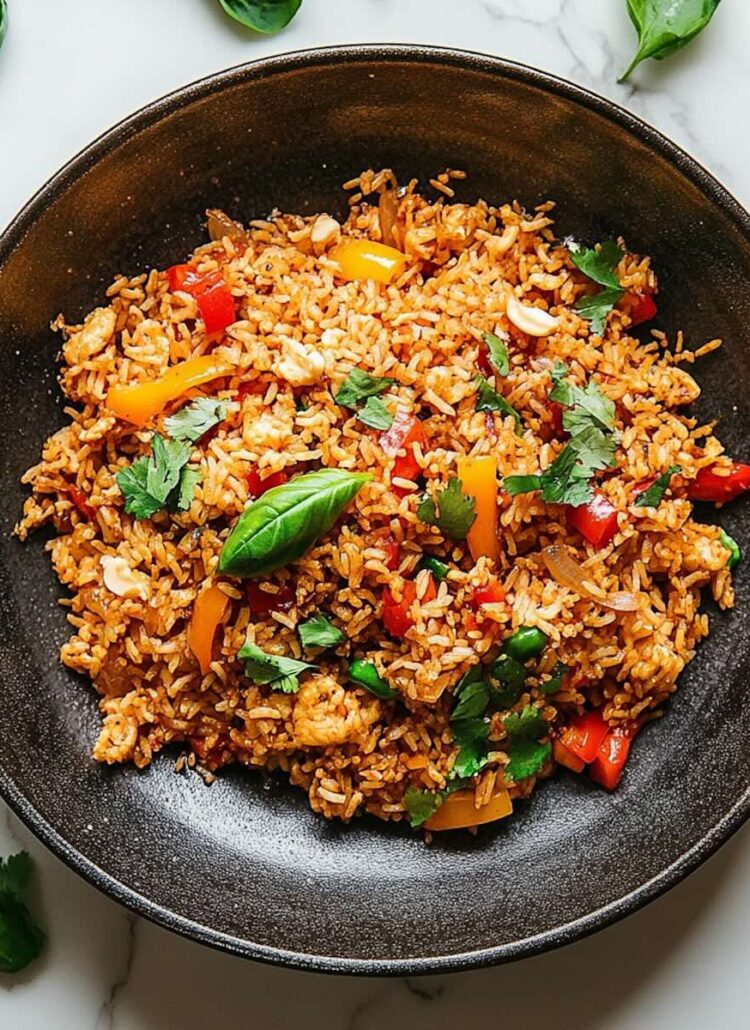
You can make Panang Chicken Curry. You can make Beef Panang Curry. You can make Thai Salmon Curry. You can make Thai Curry Fried Rice with leftover curry paste.
All of a sudden, that little container of curry paste, whether homemade or store-bought, becomes a doorway to so many cozy Thai dinners. You got this dear!
Chicken Panang Curry Frequently Asked Questions
The difference between Thai Panang curry paste and Thai Red Curry paste is that Thai Panang curry paste has peanuts, and more cumin and coriander in it the paste and Thai Red Curry doesn’t.
It can be mild to medium depending on the curry paste you use and how much you add. Start with 2 tbsp curry paste if you’re spice-sensitive, then add more next time if you want it bolder.
Yes! Chicken breasts work well. Just slice them evenly and don’t overcook them. Chicken thighs are more forgiving and stay juicier, but both are delicious.
Panang curry is best served with fresh jasmine rice, and we like it with Carrot and Cucumber Som Tom, Thai crab omelette, or fresh veggies on the side.
Yes! Panang curry reheats great. Store it in an airtight container in the fridge for up to 3 to 4 days. Reheat gently on the stove or in the microwave until warmed through.
Yes, but the coconut milk may separate a little after thawing. Stir it well as you reheat and it should come back together. For the freshest flavor, add Thai basil and lime leaves after reheating.
Want more bold Thai flavors?
- Massaman Curry Paste – A warm, comforting Thai spice blend perfect for rich curries.
- Chicken Pad Thai – An easy to understand, authentic Pad Thai recipe that I teach in my Thai cooking classes.
- 35 Popular Thai Dishes – Your guide to Thailand’s most beloved recipes.
- Beef Panang Curry– Try out the beef version if you love beef like my Thai Hubby!
Let’s stay in touch dear!
And if you want to learn how to make it in person, come join one of my Thai cooking classes in Boone, NC!
Love learning Thai kitchen tips? Sign up for my Thai-Foodie Substack newsletter and get my free Substitution Hacks Guide download, your cheat sheet for swapping Thai ingredients no matter where you live!
If you make it, I want to see! Take a pic and tag me on Instagram @thaifoodie!
Print
Chicken Panang Curry Recipe
- Total Time: 20 minutes
- Yield: 4 1x
- Diet: Gluten-Free
Description
Ingredients
1–2 tbsp coconut oil, or oil of choice that can handle a high heat
2–3 tbsp Thai Panang curry paste, homemade using my recipe, or Mae Ploy brand
1 13.5 ounce can of coconut milk
2 lb chicken thighs or breast, thinly sliced into bite-sized pieces
2–3 tbsp palm sugar
1–2 tbsp fish sauce
3 makrut lime leaves, thinly slivered
1–2 Thai fresh chilies, thinly slivered
a handful of Thai basil leaves (optional)
Instructions
Warm a wok or large frying pan over medium heat. Once warm, add 1–2 tbsp coconut oil or oil of choice.
Open your can of 13.5 ounce coconut milk and scoop the thick creamy part from the top into the pan. Stir it into the oil until it’s warm, bubbly, and starting to look glossy.
This is where the magic starts, dear!
Add 2–3 tbsp Thai Panang curry paste to the coconut cream. Stir it well until the paste is fully mixed in and smells absolutely amazing.
Don’t rush this step. Frying the curry paste helps release all those gorgeous Thai herbs, spices, and chili flavors.
Add 2 lb chicken thighs or chicken breasts, thinly sliced or cut into bite-sized pieces. Stir the chicken into the curry paste mixture until each piece is coated.
Cook until the chicken is about halfway cooked.
Pour in the rest of the 13.5 ounce can of coconut milk and stir everything together.
Let the curry simmer for a few minutes until the chicken is cooked through and tender. Chicken should reach 165 degrees F if you’re checking with a thermometer.
Stir in 2–3 tbsp palm sugar and 1–2 tbsp fish sauce, adding a little at a time and tasting as you go.
Thai cooking is all about balance. You want creamy, salty, slightly sweet, spicy, and fragrant all working together like besties.
Sprinkle 3 thinly slivered kaffir lime leaves, 1–2 thinly slivered Thai fresh chilies, and a handful of Thai basil leaves, if using, over the top.
Serve hot with jasmine rice and enjoy every cozy, creamy bite!
Notes
Additions and Substitutions
- Thai Panang curry paste substitute: Thai red curry paste.
- Coconut milk substitute: Same amount of heavy cream or milk of choice.
- Chicken substitute: Try my Beef Panang Curry, pork, shrimp, tofu, or your favorite protein.
- Palm sugar substitute: The same amount of brown sugar or white sugar.
- Fish sauce substitute: The same amount of soy sauce or coconut aminos.
- Kaffir lime leaves substitute: Leave them out or use 1/2 tsp lime zest for each lime leaf.
- Thai basil substitute: Italian basil or holy basil.
- Thai chili substitute: Red pepper flakes, sliced jalapeño, or leave it out
Tips for the Best Chicken Panang Curry
- Fry the curry paste well. This is one of the biggest secrets to making Thai curry taste amazing at home. Let the paste cook in the coconut cream until it smells fragrant and looks glossy.
- Chicken thighs are more forgiving. If you’re nervous about dry chicken, use thighs. They stay juicy and tender even if they cook a little longer.
- Don’t boil it hard. A gentle simmer keeps the chicken tender and the coconut milk creamy.
- Add the herbs at the end. Makrut lime leaves, Thai basil, and chilies are brightest and prettiest when added right before serving.
Hey dear! If you make this recipe and love it, would you leave a quick comment and rating? Your reviews help other readers discover the recipes that build connection around the table. Thank you so much!
- Prep Time: 10
- Cook Time: 10
- Category: Dinner, Thai
- Method: Stir-Fry
- Cuisine: Thai
This post contains links to affiliate websites, such as Amazon, and I receive an affiliate commission for any purchases made by you using these links. I appreciate your support!

Love how easy this is for a weeknight dinner and great instructions!