
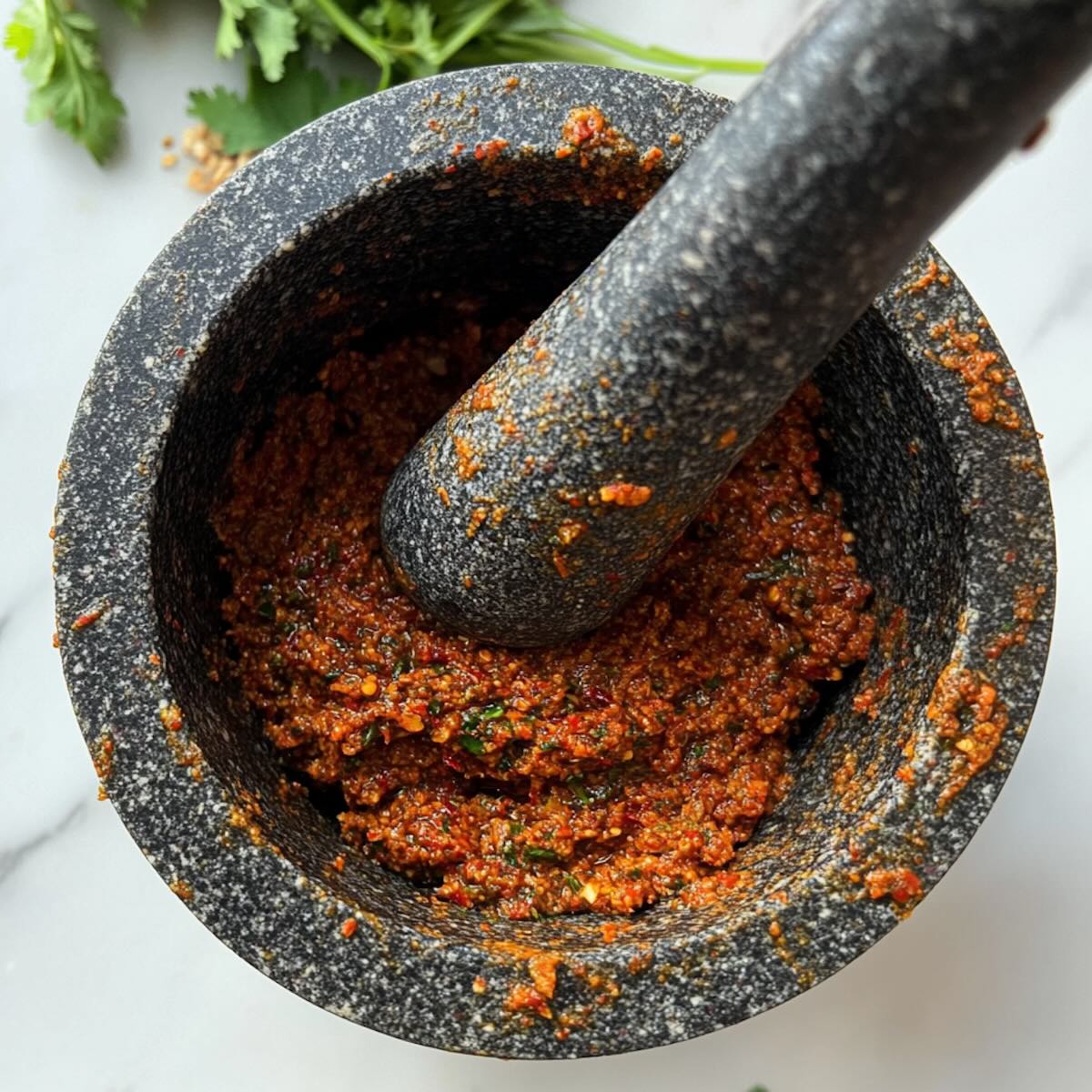
Want to jump into the world of making your own homemade Panang curry paste but nervous to take the plunge?
I feel ya dear!
Making curry paste from scratch can sound like something only Thai grandmas with giant granite mortars and magical arm strength can do, but I promise, you can do this in your own kitchen too!
This homemade Panang curry paste is bold, fragrant, nutty, citrusy, and packed with all those cozy Thai curry flavors you adore.
And once you make it yourself, you’ll understand why homemade curry paste brings a depth of flavor that store-bought just can’t do.
What Is Panang Curry Paste?
Panang curry paste is a Thai curry paste made with dried chilies, lemongrass, galangal, kaffir lime leaves, shallots, garlic, shrimp paste, spices, and peanuts.
It’s similar to Thai red curry paste, but it has a warmer, nuttier, slightly sweeter flavor because of the peanuts, cumin, and coriander.
In Thailand, curry pastes are often pounded by hand in a mortar and pestle until all those bold ingredients become one beautiful, aromatic paste. The pounding helps release the natural oils from the chilies, herbs, and spices in a way you just can’t get from a machine.
But don’t worry, dear. I’m giving you the mortar and pestle option, immersion blender method, and food processor shortcut because we are going for authentic Thai flavor that still works for your real life!
Why You’ll Love This Recipe
- Authentic Thai flavor taught to you by a Thai cooking class instructor
- Way more fragrant and fresh than store-bought curry paste
- Perfect for Beef Panang Curry, Chicken Panang Curry, Hor Mok: Red Curry Fish Cups, and Thai Curry Fried Rice
- Freezer friendly, so you can make it once and use it for easy Thai dinners later
Panang Curry Paste Ingredients You’ll Need
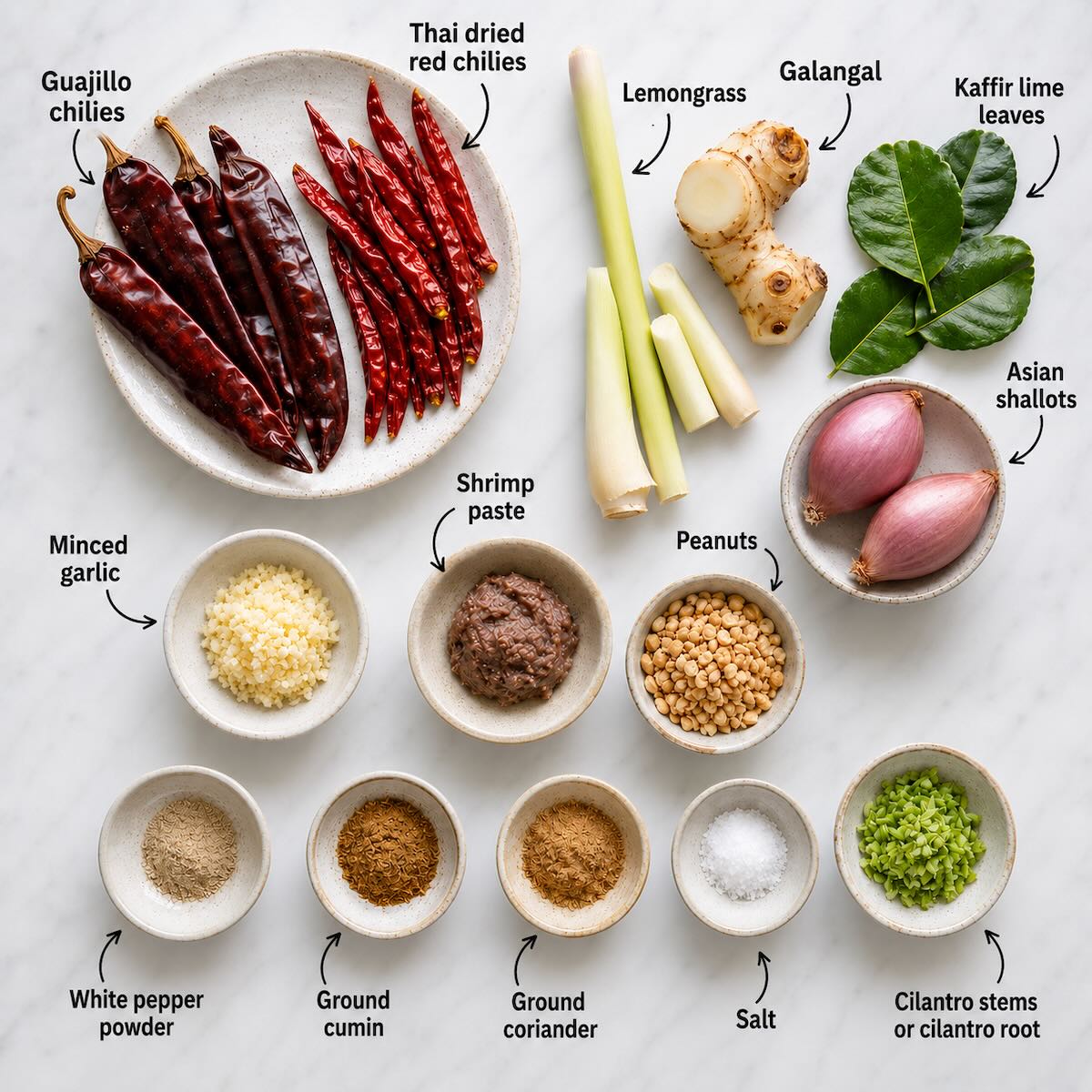
- 7 Thai dried red chilies, de-seeded – Bring classic Thai chili flavor and heat.
- 3 guajillo chilies, de-seeded – Add vibrant red color and mild fruity chili flavor. Or instead of the Thai dried red chilies and guajillo peppers, use 7–10 dried Thai spur chilies, depending on your spice preference.
- 6 kaffir lime leaves – Bright, citrusy, and one of the signature flavors that makes Thai curry taste like Thai curry.
- 1 lemongrass stalk, minced – Fresh, lemony, and essential for that fragrant Thai curry base.
- 1 tbsp minced galangal – Earthy, peppery, citrusy, and not the same as ginger, even though they look like cousins.
- 1/2 tsp white pepper powder – Adds warm peppery depth without overpowering the paste.
- 1/2 tsp ground cumin – Gives Panang its cozy, warm spice note.
- 1 tsp ground coriander – Adds that soft citrusy spice that works so beautifully with coconut milk.
- 4 Asian shallots, minced, or 2 regular shallots – Adds sweetness and savory depth.
- 2 tbsp minced garlic – Because garlic makes almost everything better, right?
- 2 tsp shrimp paste – Salty, funky, deeply savory, and so important for authentic Thai flavor.
- 1 tbsp peanuts, optional – Use this if you are making Thai Panang Curry Paste. This is one of the ingredients that makes it different from red curry paste.
- 1 tbsp minced cilantro stems or cilantro root – Cilantro root is traditional, but cilantro stems work great if that’s what you can find.
- 1/2 tsp coarse salt – Helps everything break down and brings the flavors together.
How to Make Panang Curry Paste
Prep the aromatics
Remove the seeds from 7 Thai dried red chilies and 3 guajillo chilies. Using kitchen scissors, cut them into small pieces.
In a spice blender or clean coffee grinder, grind the dried chilies into a coarse powder. Be careful when opening the lid because the chili dust can be strong!
Mince 1 lemongrass stalk, 1 tbsp galangal, 4 Asian shallots or 2 regular shallots, 2 tbsp garlic, and 1 tbsp cilantro stems or cilantro root.
Tear or thinly slice 6 kaffir lime leaves so they’re easier to break down.
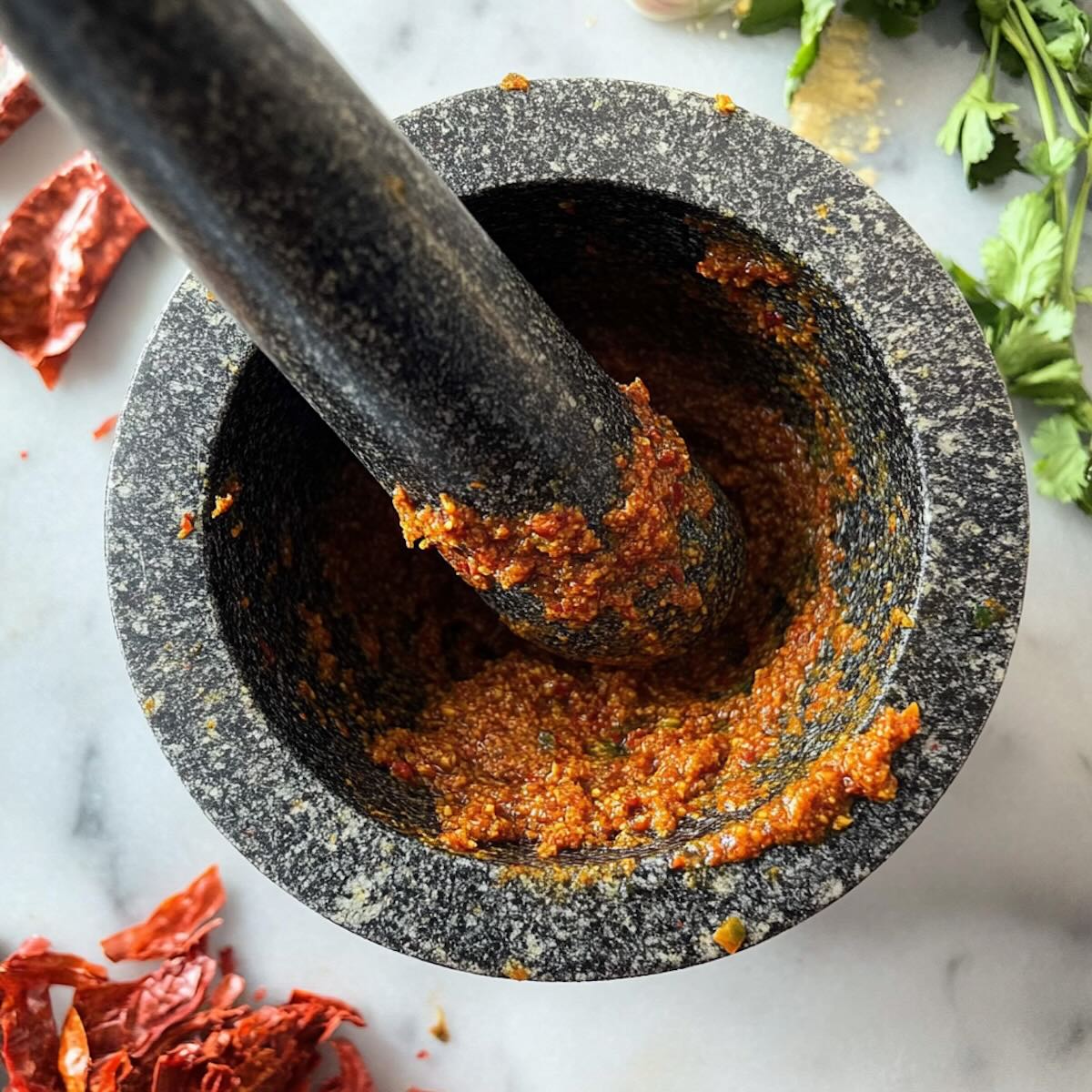
Mortar and Pestle Option
Start with the hardest ingredients
If you are using a mortar and pestle, the order matters.
Start by pounding the harder ingredients first: 1 lemongrass stalk, 1 tbsp minced galangal, 2 tbsp minced garlic, 4 Asian shallots or 2 regular shallots.
Pound until they begin to break down.
Add the fragrant Thai herbs
Add 6 kaffir lime leaves, and 1 tbsp minced cilantro stems or cilantro root.
Keep pounding until the mixture becomes more paste-like.
Add the spices, shrimp paste, peanuts, and salt
Add the ground chilies, 1/2 tsp white pepper powder, 1/2 tsp ground cumin, 1 tsp ground coriander, 2 tsp shrimp paste, 1 tbsp peanuts, and 1/2 tsp coarse salt.
Pound and mix until everything is combined and smells so good you start feeling like a real Thai auntie! It won’t look as silky smooth as store-bought curry paste because those are made with powerful machines that can break everything down super finely.
As long as there aren’t huge chunks and it looks mostly smooth, you’re good to go!
Immersion Blender Method:
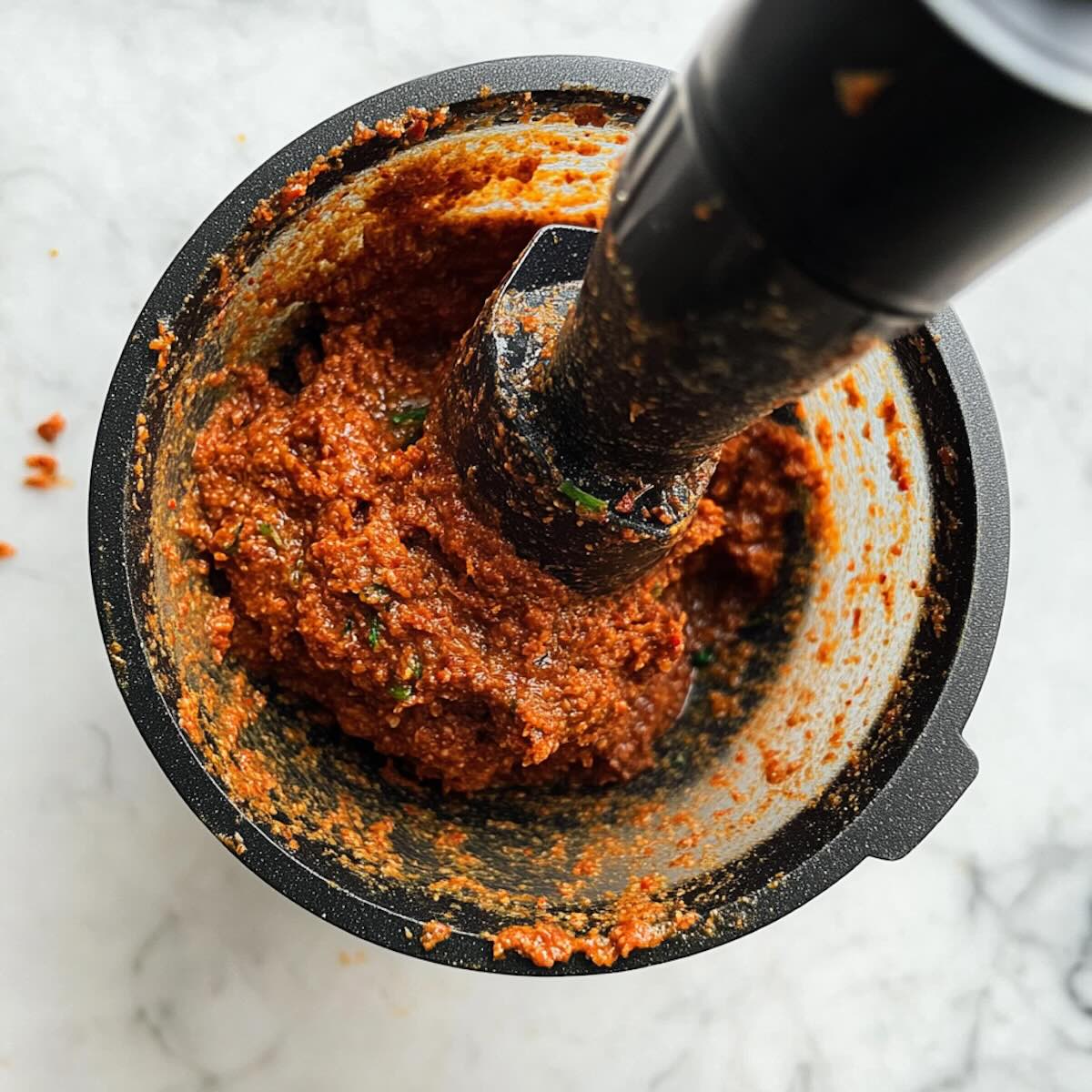
If not using the mortar and pestle, I prefer the immersion blender to the food processor since you don’t need to add any extra water to help process the ingredients like you would with a food processor.
Add all the ingredients to the immersion blender cup or bowl: the chopped up 7 Thai dried red chilies, 3 guajillo chilies, 6 kaffir lime leaves, 1 minced lemongrass stalk, 1 tbsp minced galangal, 1/2 tsp white pepper powder, 1/2 tsp ground cumin, 1 tsp ground coriander, 4 minced Asian shallots or 2 regular shallots, 2 tbsp minced garlic, 2 tsp shrimp paste, 1 tbsp peanuts, 1 tbsp minced cilantro stems or cilantro root, and 1/2 tsp coarse salt.
Blend and scrape down the sides as needed until it becomes a paste.
It won’t look as silky smooth as store-bought curry paste because those are made with powerful machines that can break everything down super finely.
As long as there aren’t huge chunks and it looks mostly smooth, you’re good to go!
Food Processor Option
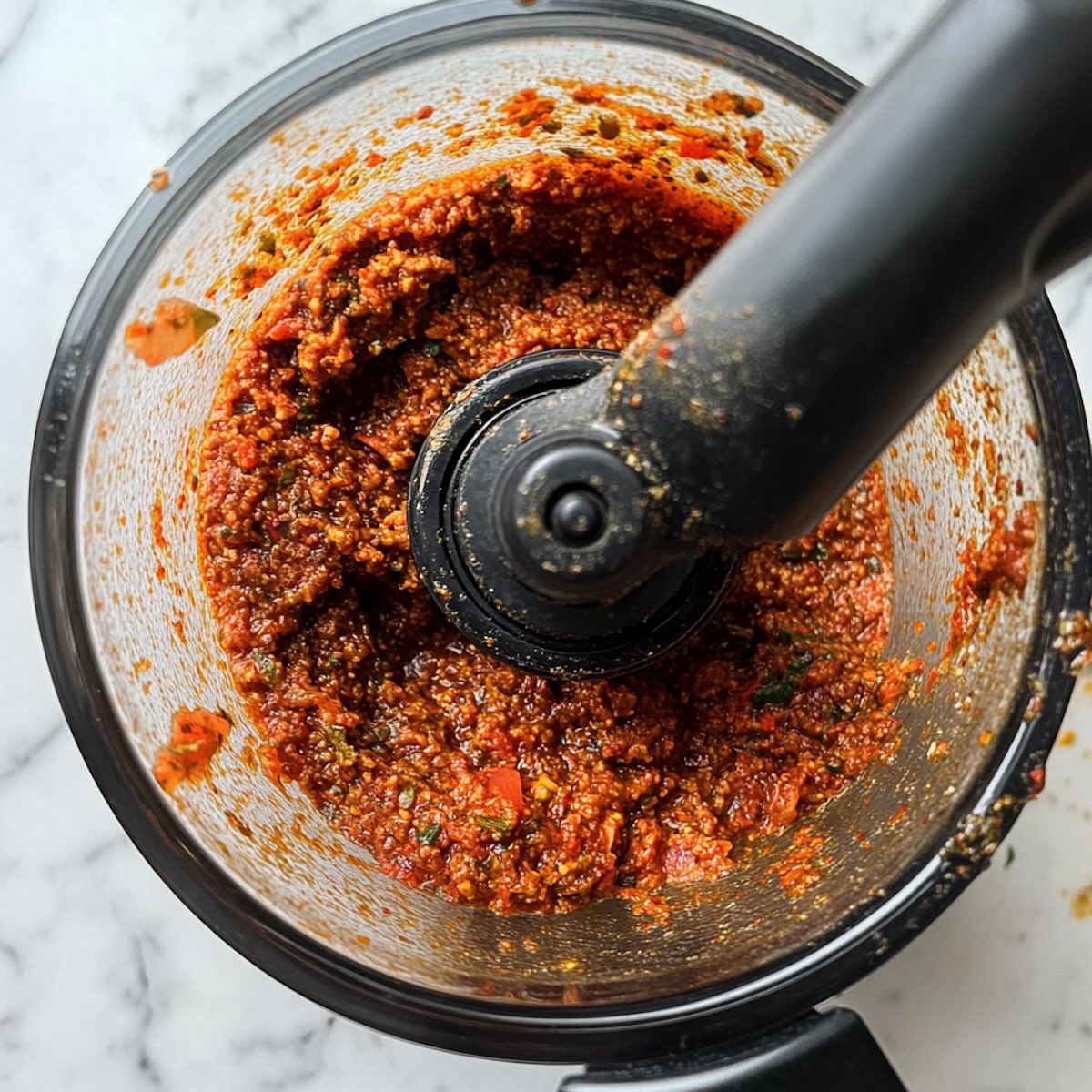
Add the chopped up 7 Thai dried red chilies, 3 guajillo chilies, 6 kaffir lime leaves, 1 minced lemongrass stalk, 1 tbsp minced galangal, 1/2 tsp white pepper powder, 1/2 tsp ground cumin, 1 tsp ground coriander, 4 minced Asian shallots or 2 regular shallots, 2 tbsp minced garlic, 2 tsp shrimp paste, 1 tbsp peanuts, 1 tbsp minced cilantro stems or cilantro root, and 1/2 tsp coarse salt to a food processor or blender.
Pulse or blend on high, adding 1 tablespoon of water at a time as needed until the ingredients are finely chopped and start to look like a paste.
It won’t look as silky smooth as store-bought curry paste because those are made with powerful machines that can break everything down super finely.
As long as there aren’t huge chunks and it looks mostly smooth, you’re good to go!
Use or store
Use the paste immediately in your favorite Thai curry recipe, or store any leftovers in an airtight container in the fridge for up to 1 week or in the freezer for up to 3 months.
Future you will thank you when you pull homemade curry paste from the freezer and make a Thai dinner that takes minutes but tastes like you worked way harder than you did.
Here are some fun ways to use it!

- Beef Panang Curry – Rich, creamy, nutty, and one of Thai Hubby’s favorite ways to eat Panang curry.
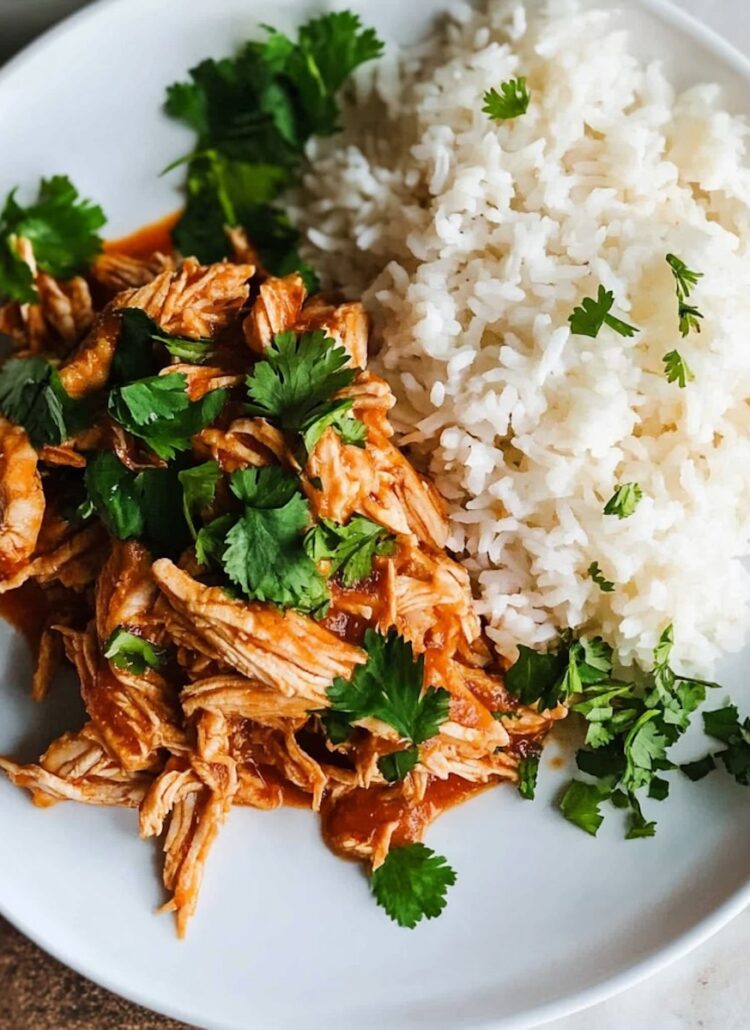
- Instant Pot Chicken Curry – Perfect for when you want a cozy, creamy Thai curry fast, without babysitting the stove.
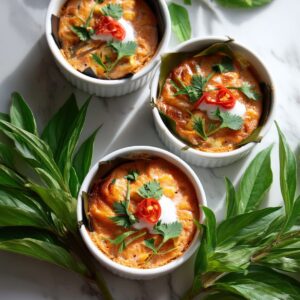
- Hor Mok: Red Curry Fish Cups – A fun, flavorful way to use curry paste in tender Thai fish custard cups that are soft, spoonable, and full of coconut curry flavor.
- Slow Cooker Chicken Curry – A low-effort, comforting dinner that lets the curry paste slowly soak into the chicken and coconut milk.
- Quick Thai Salmon Curry – A quick but fancy-feeling curry that makes weeknight salmon taste like something from a Thai restaurant.
- Chicken Panang Curry – A classic, family-friendly Panang curry with tender chicken, coconut milk, and that heart-warming homemade curry paste flavor.
- Thai Curry Fried Rice – A fun way to use extra curry paste! Just stir a spoonful into fried rice for bold Thai curry flavor in every bite.
Additions and Substitutions
- Thai dried red chili substitute: Omit or fresh or dried cayenne peppers or serrano chiles.
- Guajillo chili substitute: Dried Ancho chile or the Pasilla Negro chile. It’s best to use dried Thai Spur chilies, but I have trouble finding them in America.
- Kaffir lime leaves substitute: Lime zest
- Lemongrass substitute: Lemongrass paste
- Fresh Galangal substitute: Dried galangal
- Shallot substitute: Red onion
- Shrimp paste substitute: Miso paste
- Peanut substitute: Omit if needed, especially for allergies
- Cilantro stem substitute: Just leave it out
Tips for the Best Panang Curry Paste
- Mince everything first. Whether you’re using a mortar and pestle, immersion blender, or food processor, smaller pieces break down faster and make the whole process easier.
- Don’t stress if it isn’t perfectly smooth. Store-bought curry paste is made with commercial machines. Homemade paste can be a little more rustic and still taste amazing.
- Freeze leftovers in tablespoon portions. This makes it so easy to grab just what you need for curry, fried rice, soup, or marinades.
Behind the Panang Curry Paste Recipe
The part that freaked me out the most about making Thai curry paste from scratch was the ingredient list.
It’s not one of those cute little five-ingredient recipes where you toss everything into a bowl and call it a day. Nope.
This one took a few trips to my pantry and fridge to gather all 14 ingredients!!! the dried chilies, kaffir lime leaves, lemongrass, galangal, shallots, garlic, shrimp paste, spices, and peanuts.
And then most of those ingredients aren’t just thrown in whole. They need to be minced, sliced, torn, or prepped in some way.
So yes, dear. It is a little extra.
But in the end, it’s so worth it!!!
I loved seeing each ingredient on its own, then watching how all their unique little flavor powers combined into one super flavor-packed Thai curry paste that I made with my own hands!
But finding the right chili for homemade Panang curry paste? That was the hardest part.
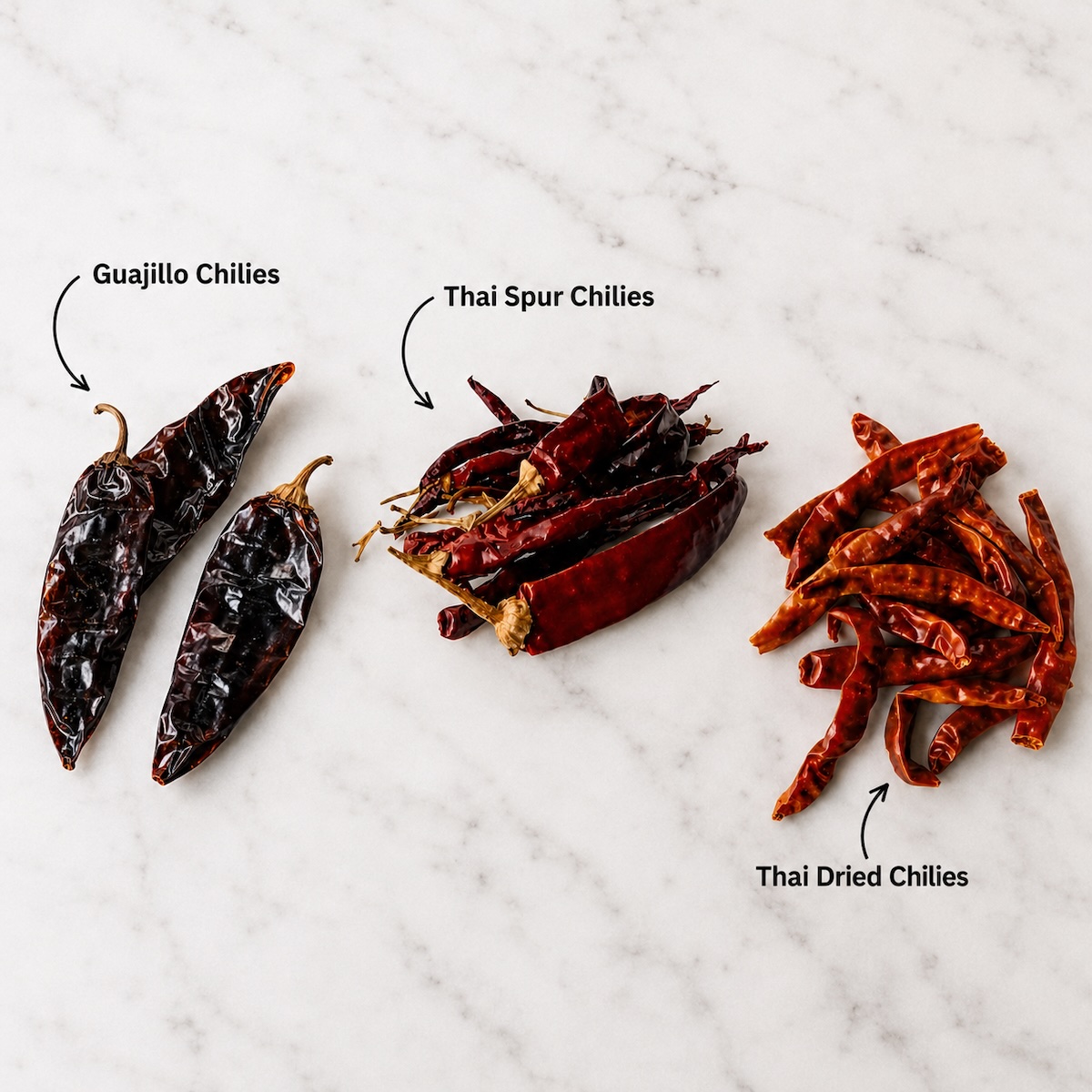
Almost every Thai curry paste recipe I looked at said to use “Thai dried red chilies,” but whenever I did use typical ones, it never made my curry that red, but just a weird color and super spicy.
But then Thai Hubby sent me homemade Thai red curry paste videos from Thailand, and I noticed something.
Even though I was using something labeled “Thai dried chili,” and the person in the video was also using a dried red Thai chili, they did not look the same.
The chilies I had were Thai dried chilies, small, thin, and packed with heat. Amazing for spice, but not what gives Thai curry paste that deep, rich red color. What they were using was Thai spur chilies which aren’t as spicy and great to add bright red color.
Then one of my favorite Thai food teachers, Hot Thai Kitchen, gave the best tip: if you can’t find Thai spur chilies for Thai red curry paste or Panang curry paste, use dried guajillo chilies.
Guajillo chilies are large, a deep red, and much milder than those tiny Thai dried chilies. And dear, it worked!
My curry paste went from yellowish-brown to that gorgeous tomatoey-red color a Thai Panang curry paste should have.
That’s why I use a mix of Thai dried red chilies and guajillo chilies in this recipe. You still get the Thai chili heat and flavor, but you also get that beautiful red color without making your curry so spicy no one can breathe.
A win for authentic flavor and family dinner survival!
Panang Curry Paste Frequently Asked Questions
It’s usually made from dried chilies, lemongrass, galangal, kaffir lime leaves, shallots, garlic, shrimp paste, spices, cilantro root or stems, and peanuts.
The main difference is that Panang has peanuts, plus more cumin and coriander. Thai red curry paste usually doesn’t include peanuts and has a slightly sharper, more straightforward chili flavor.
It can be! The spice level depends on what dried chilies you use and whether you remove the seeds. For a milder paste, remove the seeds and use more mild dried chilies like guajillo.
Yes! A food processor or immersion blender works great.
Yes! Store it in an airtight container or freeze it in tablespoon portions for up to 3 months. That way you can pull out exactly what you need for an easy Thai dinner.
Want more Thai curry recipes?

- Yelow Curry Noodle Soup – A creamy, slurpable Thai curry soup with noodles that feels like comfort food with a big bold Thai flavor hug.
- Thai Green Curry – A bright, creamy, herb-packed Thai curry that’s perfect with chicken, veggies, or whatever protein you love.
- Massaman Curry Paste – A warm, cozy Thai curry paste filled with toasted spices, dried chilies, lemongrass, galangal, and all that rich Massaman flavor.
- Green Curry Fried Rice – A fun, flavor-packed way to use Thai green curry paste when you want all that curry flavor in fried rice form.
Let’s stay in touch dear!
And if you want to learn how to make it in person, come join one of my Thai cooking classes in Boone, NC!
Love learning Thai kitchen tips? Sign up for my Thai-Foodie Substack newsletter and get my free Substitution Hacks Guide download, your cheat sheet for swapping Thai ingredients no matter where you live!
If you make it, I want to see! Take a pic and tag me on Instagram @thaifoodie!
Print
Panang Curry Paste Recipe
- Total Time: 25 minutes
- Yield: 4 1x
- Diet: Gluten Free
Description
Want to jump into the world of making your own homemade Thai Panang Curry paste but nervous to take the plunge? I feel ya, but this simplified recipe will help you learn the magic!
Ingredients
7 Thai dried red chilies, de-seeded
3 guajillo chilies, de-seeded, de-seeded (Or instead of the Thai dried red chili and guajillo peppers use 7-10 dried Thai spur chilies, depending on spice preference)
1/2 tsp. ground cumin
1 tsp. ground coriander
4 Asian shallots minced or 2 shallots
2 tbsp minced garlic
1 tbsp peanuts (optional, only use if making Thai Panang Curry Paste)
1 tbsp cilantro stems minced or cilantro root
1/2 tsp salt
Instructions
Prep the aromatics
Remove the seeds from 7 Thai dried red chilies and 3 guajillo chilies. Using kitchen scissors, cut them into small pieces.
In a spice blender or clean coffee grinder, grind the dried chilies into a coarse powder. Be careful when opening the lid because the chili dust can be strong!
Mince 1 lemongrass stalk, 1 tbsp galangal, 4 Asian shallots or 2 regular shallots, 2 tbsp garlic, and 1 tbsp cilantro stems or cilantro root.
Tear or thinly slice 6 kaffir lime leaves so they’re easier to break down.
Mortar and Pestle Option
Start with the hardest ingredients
If you are using a mortar and pestle, the order matters.
Start by pounding the harder ingredients first: 1 lemongrass stalk, 1 tbsp minced galangal, 2 tbsp minced garlic, 4 Asian shallots or 2 regular shallots.
Pound until they begin to break down.
Add the fragrant Thai herbs
Add 6 kaffir lime leaves, and 1 tbsp minced cilantro stems or cilantro root.
Keep pounding until the mixture becomes more paste-like.
Add the spices, shrimp paste, peanuts, and salt
Add the ground chilies, 1/2 tsp white pepper powder, 1/2 tsp ground cumin, 1 tsp ground coriander, 2 tsp shrimp paste, 1 tbsp peanuts, and 1/2 tsp coarse salt.
Pound and mix until everything is combined and smells so good you start feeling like a real Thai auntie! It won’t look as silky smooth as store-bought curry paste because those are made with powerful machines that can break everything down super finely.
As long as there aren’t huge chunks and it looks mostly smooth, you’re good to go!
Immersion Blender Option
If not using the mortar and pestle, I prefer the immersion blender to the food processor since you don’t need to add any extra water to help process the ingredients like you would with a food processor.
Add all the ingredients to the immersion blender cup or bowl: the chopped up 7 Thai dried red chilies, 3 guajillo chilies, 6 kaffir lime leaves, 1 minced lemongrass stalk, 1 tbsp minced galangal, 1/2 tsp white pepper powder, 1/2 tsp ground cumin, 1 tsp ground coriander, 4 minced Asian shallots or 2 regular shallots, 2 tbsp minced garlic, 2 tsp shrimp paste, 1 tbsp peanuts, 1 tbsp minced cilantro stems or cilantro root, and 1/2 tsp coarse salt.
Blend and scrape down the sides as needed until it becomes a paste.
It won’t look as silky smooth as store-bought curry paste because those are made with powerful machines that can break everything down super finely.
As long as there aren’t huge chunks and it looks mostly smooth, you’re good to go!
Food Processor Option
Add everything to the food processor
Add the chopped up 7 Thai dried red chilies, 3 guajillo chilies, 6 kaffir lime leaves, 1 minced lemongrass stalk, 1 tbsp minced galangal, 1/2 tsp white pepper powder, 1/2 tsp ground cumin, 1 tsp ground coriander, 4 minced Asian shallots or 2 regular shallots, 2 tbsp minced garlic, 2 tsp shrimp paste, 1 tbsp peanuts, 1 tbsp minced cilantro stems or cilantro root, and 1/2 tsp coarse salt to a food processor or blender.
Blend into a paste
Pulse or blend on high, adding 1 tablespoon of water at a time as needed until the ingredients are finely chopped and start to look like a paste.
It won’t look as silky smooth as store-bought curry paste because those are made with powerful machines that can break everything down super finely.
As long as there aren’t huge chunks and it looks mostly smooth, you’re good to go!
Use or store
Use the paste immediately in your favorite Thai curry recipe, or store any leftovers in an airtight container in the fridge for up to 1 week or in the freezer for up to 3 months.
Future you will thank you when you pull homemade curry paste from the freezer and make a Thai dinner that takes minutes but tastes like you worked way harder than you did.
Here are some fun ways to use it:
- Beef Panang Curry – Rich, creamy, nutty, and one of Thai Hubby’s favorite ways to eat Panang curry.
- Instant Pot Chicken Curry – Perfect for when you want a cozy, creamy Thai curry fast, without babysitting the stove.
- Hor Mok: Red Curry Fish Cups – A fun, flavorful way to use curry paste in tender Thai fish custard cups that are soft, spoonable, and full of coconut curry flavor.
- Slow Cooker Chicken Curry – A low-effort, comforting dinner that lets the curry paste slowly soak into the chicken and coconut milk.
- Quick Thai Salmon Curry – A quick but fancy-feeling curry that makes weeknight salmon taste like something from a Thai restaurant.
- Chicken Panang Curry – A classic, family-friendly Panang curry with tender chicken, coconut milk, and that heart-warming homemade curry paste flavor.
- Thai Curry Fried Rice – A fun way to use extra curry paste! Just stir a spoonful into fried rice for bold Thai curry flavor in every bite.
Notes
Additions and Substitutions
- Thai dried red chili substitute: Omit or fresh or dried cayenne peppers or serrano chiles.
- Guajillo chili substitute: Dried Ancho chile or the Pasilla Negro chile. It’s best to use dried Thai Spur chilies, but I have trouble finding them in America.
- Kaffir lime leaves substitute: Lime zest
- Lemongrass substitute: Lemongrass paste
- Fresh Galangal substitute: Dried galangal
- Asian shallot substitute: Regular shallots or red onion
- Shrimp paste substitute: Miso paste
- Peanut substitute: Omit if needed, especially for allergies
- Cilantro root substitute: Cilantro stems
Tips for the Best Panang Curry Paste
- Mince everything first. Whether you’re using a mortar and pestle or food processor, smaller pieces break down faster and make the whole process easier.
- Don’t stress if it isn’t perfectly smooth. Store-bought curry paste is made with commercial machines. Homemade paste can be a little more rustic and still taste amazing.
- Freeze leftovers in tablespoon portions. This makes it so easy to grab just what you need for curry, fried rice, soup, or marinades.
Hey dear! If you make this recipe and love it, would you leave a quick comment and rating? Your reviews help other readers discover the recipes that build connection around the table. Thank you so much!
- Prep Time: 20
- Cook Time: 5
- Category: Thai
- Method: Paste
- Cuisine: Thai
This post contains links to affiliate websites, such as Amazon, and I receive an affiliate commission for any purchases made by you using these links. I appreciate your support!

Such a helpful guide so I can finally make curry paste at home!