

Love ordering Vegan Pad Thai at your favorite Thai restaurant? Now you can make it right at home, no fish sauce, no eggs, and no animal products, just bold Thai flavors and golden Thai Fried Tofu soaking up the tangy-sweet Pad Thai sauce that makes this dish your new fav!
What Goes in Vegan Pad Thai?
Vegan Pad Thai is Thailand’s most famous noodle dish made completely plant-based, rice noodles stir-fried with crispy tofu, bean sprouts, and green onions, tossed in a bright tamarind sauce made without fish sauce or eggs. Instead of fish sauce, we use my go-to vegan fish sauce substitute: soy sauce mixed with vinegar and a pinch of salt for that same salty umami punch.
The Thai Fried Tofu plays the starring role here. Fried until perfectly golden on the outside and tender on the inside, it soaks up every drop of that tangy-sweet Pad Thai sauce. It’s finished with crunchy peanuts, a squeeze of lime, and Thai chili flakes for that classic street-style finish you’d find at your favorite Bangkok Pad Thai vendor.
Fun fact: Some Thais say Pad Mee Korat, a spicier noodle dish from Korat in northeastern Thailand, has a sauce that could be considered the vegan version of Pad Thai. That’s where the inspiration for my Vegan Pad Thai sauce came from! You can read more about Pad Mee Korat and our visit to Korat in my Behind the Recipe section below.
If you’re looking for other vegan Thai dishes, don’t miss my Pad See Ew Vegan Tofu, a smoky soy-sauce noodle stir-fry with chewy rice noodles and crisp broccoli, or my Vegan Thai Fried Rice, made with fragrant jasmine rice, colorful veggies, and a splash of my vegan soy sauce mix for that real Thai street-food flavor.
Want to dive deeper into what makes authentic Pad Thai so special? Check out my Complete Authentic Guide to Pad Thai where I share its history, ingredient substitutes, and the cooking secrets I teach in my Thai classes.
Why You’ll Love This Recipe
- Truly vegan, truly Thai – Made without fish sauce or eggs, but still packed with all the sweet, sour, salty, and savory notes that make authentic Pad Thai unforgettable.
- Tofu takes center stage – Thai Fried Tofu gives this dish rich texture and absorbs every bit of the sauce, so every bite is flavorful and satisfying.
- Quick and easy – Once your tofu and sauce are prepped, the whole dish comes together in minutes.
- Better than takeout – Skip the restaurant bill and make a big wok full at home for less!
Vegan Pad Thai Ingredients You’ll Need
Noodles
- 16 oz. fresh rice noodles (or 16 oz. dry, medium-width rice noodles) – Fresh noodles are my favorite since they’re soft and easy to stir-fry. If using dry noodles, soak them in room-temp water for about an hour until pliable (never boil or they’ll get gummy!).

Pad Thai Sauce

- ½ of a tamarind block or ¾ cup tamarind concentrate – Gives that tangy, slightly fruity sourness that defines Pad Thai.
- ¾ cup palm sugar, finely chopped – Adds a warm, caramel sweetness that balances the tang. Use 1/2 cup if you prefer less sweet.
- ¾ cup brown sugar – Deepens the sweetness for a richer flavor. Use 1/2 cup if you prefer less sweet.
- Vegan fish sauce substitute – Mix 3 tablespoons Thai thin soy sauce, 4 tablespoons Thai fermented soybean paste (tao jiew) or 3 tablespoons miso or Korean doenjang; Thai fermented soybean paste is salty, savory, and full of umami. It’s thinner and saltier than miso, with visible soybeans, and adds the same depth that fish sauce gives in traditional Pad Thai. If you can’t find it, miso or doenjang work great too.
- ½ cup water – Helps balance and smooth out the sauce.
Pad Thai Stir-Fry Ingredients

- 4–6 tbsp coconut oil (or oil of choice) – Adds richness and keeps noodles from sticking.
- 6 garlic cloves, minced or smashed – The classic aromatic base of almost every Thai stir-fry.
- 2 shallots, finely chopped (optional) – Adds a gentle sweetness and depth of flavor.
- 2 cups extra-firm tofu, pressed and cut into thin strips (about ¼ to ½ inch thick and 2 to 3 inches long — or whatever size you like for easy eating— You can deep fry the tofu, aka Thai Fried Tofu, for the crispiest texture like I do, or pan fry it in a few tablespoons of oil until golden on all sides. If you pan fry, toss the tofu in 1–2 teaspoons of cornstarch first so it gets that same lightly crisp coating that holds up beautifully in the sauce.
- 2 cups fresh bean sprouts – Add crunch and freshness at the end.
- 1 cup green onions or Chinese garlic chives, cut into 2-inch pieces – Mildly garlicky and fresh; both are delicious options.
- ¼ cup preserved radish, chopped (optional) – Adds a salty-sweet crunch, just like you’ll find in Thai street Pad Thai.
Toppings
- Crushed peanuts – Classic Pad Thai crunch!
- Dried Thai red chili pepper flakes – For heat
- Sugar – For those who like it sweeter
- Lime wedges – For that zesty pop
- Extra bean sprouts and green onions – For freshness
How to Make Vegan Pad Thai


Step 1: Soak the Noodles
If using 16 oz. fresh rice noodles, you don’t have to soak them, but I like to for about 30 minutes in room-temperature water to help them cook even quicker when stir-frying. If using 16 oz. dry rice noodles, soak for about 1 hour, never boil or they’ll get gummy. Drain and set aside.
Step 2: Make the Sauce
If using ½ of a tamarind block, cover it in 1 cup warm water for 10 minutes to soften. Press through a fine-mesh strainer to remove the seeds and fibers, or use your hands to squeeze out the pulp. Measure out ¾ cup of the paste, or use ¾ cup jarred tamarind concentrate if that’s easier. For the traditional Thai method, which is what I do, you can use your hands to squeeze out the pulp, make a paste, and throw away the seeds and fibers.
In a small saucepan, combine the ¾ cup palm sugar, ¾ cup brown sugar, ¾ cup tamarind concentrate, 2 tablespoons soy sauce, 3 tablespoons fermented soybean paste (tao jiew) or 2 tablespoons miso or Korean doenjang, and ½ cup water. Stir over medium heat until the sugars dissolve and the sauce is smooth. If you prefer a less sweet Pad Thai, start with ½ cup of each sugar and adjust to taste.
Taste and adjust to your liking, add more tamarind for sour, more sugar for sweet, or a little extra soy sauce for saltier. Set the sauce aside while you prep the noodles and tofu.
Step 3: Cook the Aromatics and Tofu


Work in 2 batches so your noodles don’t clump. Heat 2 to 3 tablespoons coconut oil in a large wok or cast-iron skillet over medium-high heat. Add 3 garlic cloves, minced, and 1 shallot, finely chopped if using, and stir until fragrant.
Add 2 cups extra-firm tofu, pressed and cubed. You can deep fry and make Thai Fried Tofu for the crispiest texture like I do, or pan fry it in a few tablespoons of oil until golden on all sides. If pan frying, toss the tofu in 1–2 teaspoons cornstarch first for a light, crisp coating that helps it hold up in the sauce. Tofu is also sold pre-fried at Asian markets if you want to skip the frying step entirely.
Remove the tofu from the pan and set aside. No need to wash the pan—you’ll use it again to cook the noodles next.


Step 4: Cook the Noodles
Important note: Only cook two servings of noodles at a time so they don’t get gummy from too much moisture. You will do this recipe in two batches.
Add another 2 to 3 tablespoons coconut oil if needed, then add half the noodles, about 8 ounces, and a ladleful of sauce. Keep the noodles moving quickly so they don’t stick, using tongs or two spatulas to flip and separate them. Add a splash of water if needed to loosen.
Step 5: Combine Everything
Once the noodles are tender, add the fried tofu, ½ cup green onions or garlic chives cut into 2-inch pieces, 1 cup fresh bean sprouts, and 2 tablespoons preserved radish if using, and another ladle of sauce if needed. Stir-fry just until everything is heated through, then remove from heat. Repeat with the second half of noodles and sauce if needed.
You might have some extra sauce left over. Store it in a jar in the fridge for up to 2–3 weeks, or freeze it for up to 3 months. Just give it a stir before using again.
Step 6: Serve with Toppings
Serve your Vegan Pad Thai with Tofu right away while it’s hot. Top with crushed peanuts, lime wedges, Thai red chili flakes, sugar, and extra bean sprouts and green onions for freshness and crunch.

Additions and Substitutions
- Rice noodles substitute: Glass noodles Pad Thai, Korean sweet potato noodles, or linguine. Cook until al dente.
- Tamarind substitute: ½ cup rice vinegar + ¼ cup lime juice.
- Palm sugar substitute: Use brown sugar instead.
- Vegetable additions: Try broccoli florets, bell peppers, mushrooms, or shredded carrots.
- Nut-free: Skip peanuts and top with toasted sesame seeds.
- Thai miso paste substitute: Mix 2½ tablespoons soy sauce, 2½ tablespoons vinegar (any kind except balsamic), and a pinch of salt, to taste
- Gluten-free version: Use gluten-free soy sauce or tamari instead of soy sauce, and vinegar instead of fermented soybean paste. Rice noodles are naturally gluten-free.
- Pad Mee Korat variation: For a spicier twist inspired by Thailand’s Isaan region, skip the preserved radish and add 1–2 teaspoons Thai chili flakes while stir-frying, and a little more Thai thin soy sauce.
Tips for the Best Vegan Pad Thai
- Make ahead: Prep the Pad Thai Sauce, veggies and even Thai Fried Tofu a day or two in advance. Store the sauce in the fridge and chopped veggies and fried tofu in containers, then stir-fry everything fresh when you’re ready to eat and it only takes a few minutes!
- Use a big wok or cast-iron skillet so the noodles don’t steam.
- Fry the tofu first for a crisp texture that holds up in the sauce.
- Don’t over-sauce! Add gradually so the noodles stay springy, not soggy. You might have extra sauce and that’s ok.
- Let everyone customize toppings – Just like at a Thai street stall!
Storing and Reheating Vegan Pad Thai
- Fridge: Store in an airtight container for up to 3 days, but really it’s best eaten fresh because Pad Thai noodles dry out and get hard as they sit.
- Freezer: I don’t recommend freezing Pad Thai once the noodles are mixed with the sauce, since they can get a weird texture. But the Pad Thai sauce freezes great! Store it in the fridge for up to 2-3 weeks, or freeze for up to 3 months.
- Reheat: Warm in a skillet with oil and a splash of water or Pad Thai Sauce until steaming hot. Pad Thai noodles can be a little tricky to bring back to life, so check out my How to Reheat Pad Thai post for all my best tips to keep them soft and saucy.
Vegan Pad Thai Frequently Asked Questions
Yes! Pad Thai can easily be made vegan by skipping the eggs, meat, and fish sauce. Traditional Pad Thai sauce uses tamarind, palm sugar, and fish sauce, but you can make a simple vegan version using this recipe with soy sauce and miso, or vinegar, and adding in a protein like tofu.
Rice noodles, tofu, bean sprouts, green onions, tamarind, palm sugar, brown sugar, and a vegan fish-sauce substitute made from soy sauce and Thai miso paste.
It’s tangy, sweet, and savory all at once, with a fresh crunch from bean sprouts and peanuts.
Yes! Vegan Pad Thai is still very authentic to Thai cooking. In Thailand, there’s even a noodle dish called Pad Mee Korat that’s popular in the Isaan region (northeastern Thailand). It’s very similar to Pad Thai but naturally made without fish sauce or egg, using fermented soybean paste and soy sauce instead. If you ever visit Thailand, you can try ordering Pad Mee Korat, just make sure to ask for no meat since it sometimes includes pork.
Absolutely! Use gluten-free soy sauce or tamari in place of regular soy sauce, and substitute vinegar for the fermented soybean paste to keep the sauce gluten-free. The good news is that rice noodles are naturally gluten-free, so with those simple swaps, you can enjoy Vegan Pad Thai that’s both authentic and safe for gluten-free eaters.
Yes, prep the sauce, tofu and chop veggies ahead, but always cook noodles fresh before serving.
Trader Joe’s Vegetable Pad Thai is vegetarian, but not completely vegan because it contains egg. If you’re looking for a truly vegan Pad Thai, it’s best to make it at home so you can control the ingredients and skip the egg and fish sauce.
In vegan Pad Thai, the egg is usually just left out, which is how many Thai vendors prepare it. If you miss the soft egg texture, you can mix in a few tablespoons of soft tofu or scramble a vegan egg alternative like JUST Egg before adding the noodles.
Mix 3 tablespoons soy sauce, and 4 tablespoons fermented soybean paste (tao jiew) or 3 tablespoons miso or Korean doenjang. This creates a salty, savory base full of umami, just like traditional Pad Thai sauce. Tao jiewis a Thai fermented soybean paste that’s thinner and saltier than miso, and it gives the sauce a similar umami note that fish sauce usually adds.
Behind the Vegan Pad Thai Recipe

This summer our family visited Korat in northeastern Thailand, known as Isaan, a region famous for its spicy food and friendly, rural way of life. We went to see Thai Hubby’s former professor, who now runs a small family farm there.
We loved touring her land and seeing how pak boong (morning glory) grows right in the water. The kids, carrying umbrellas to block the hot Thai sun, had so much fun picking plump green guavas straight from the tree. We dipped them into the sugar and spice mix she and I made together in her kitchen, sweet, salty, and a little fiery, just the way I love it.
After the farm tour, she took us to a well-known local restaurant in Korat and ordered a huge spread of classic Isaan dishes like Thai sticky rice, Thai pork jerky, grilled Isaan sausage, fried frog legs, and three different som tums, plus a dish I had never tried before: Pad Mee Korat.

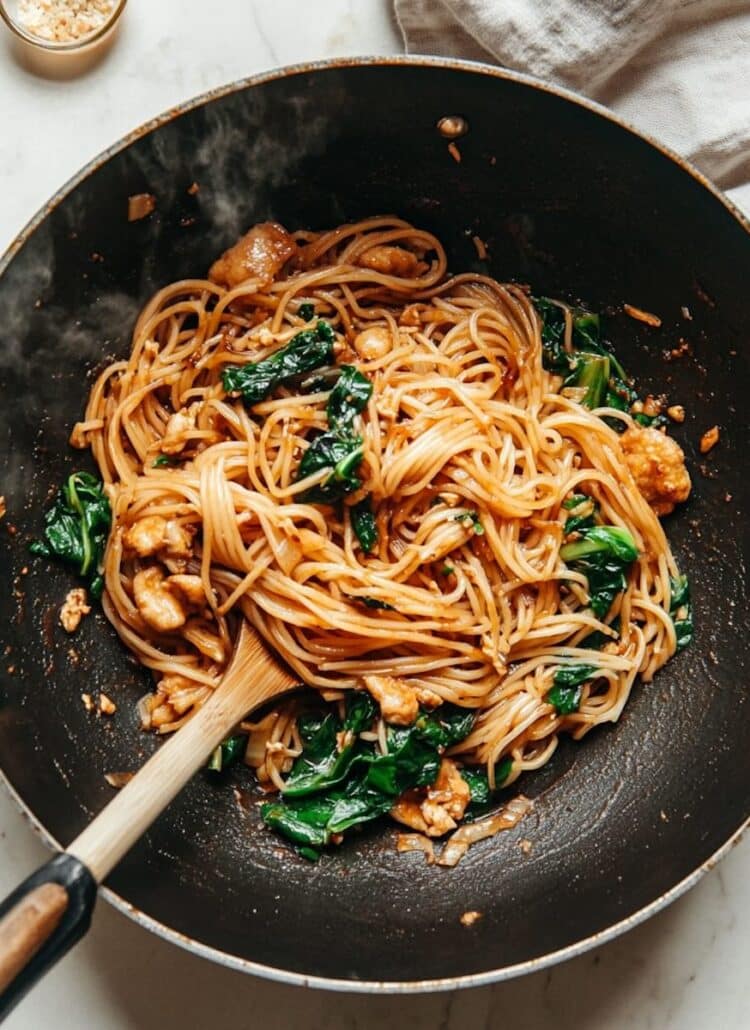
Some Thais call Pad Mee Korat Pad Thai’s Vegan cousin. It looks similar, with rice noodles, green onions, bean sprouts, and tofu, but it has a Vegan Pad Thai Sauce. Instead of fish sauce, it is made with a salty, savory miso soybean paste mixed with soy sauce, a naturally vegan version of Pad Thai Sauce that is just as flavorful and even spicier since Thai dried chili flakes are added in too.
I loved watching my kids try it for the first time, their faces lighting up from the heat and the fun of tasting something new. I was a little bummed when we left Korat because I didn’t see Pad Mee Korat anywhere else on our travels.
But now, whenever I make Vegan Pad Thai at home, I use a sauce inspired by Pad Mee Korat, naturally vegan, rich with soy sauce and fermented soybean paste, and I think of that day on the farm and my first taste of Pad Mee Korat, but definitely not my last.
And if you’d love to learn how to make Vegan Pad Thai in person, come join me for a Thai cooking class in Boone, NC! And until then, share your creations with me on Instagram @thaifoodie!
Want to Try Another Pad Thai?
- Pad Thai Sauce – make-ahead base for any version
- Chicken Pad Thai – probably the most ordered Thai dish in America
- Beef Pad Thai – fav for all the beef lovers like Thai Hubby
- Woon Sen Pad Thai – lighter twist with glass noodles
- Gluten-Free Pad Thai – Is Pad Thai gluten free? Learn here!

Vegan Pad Thai with Tofu
- Total Time: 25 minutes
- Yield: 4-6 1x
- Diet: Vegan
Description
Love ordering Vegan Pad Thai at your favorite Thai restaurant? Now you can make it right at home, no fish sauce, no eggs, and no animal products, just bold Thai flavors and golden Thai Fried Tofu soaking up the tangy-sweet Pad Thai sauce that makes this dish your new fav!
Ingredients
Noodles
-
16 oz. fresh rice noodles (or 16 oz. dry, medium-width rice noodles)
Pad Thai Sauce
-
½ of a tamarind block or ¾ cup tamarind concentrate
-
¾ cup palm sugar, finely chopped, or to taste
-
¾ cup brown sugar, or to taste
-
Vegan fish sauce substitute: Mix 3 tablespoons Thai thin soy sauce, 4 tablespoons Thai fermented soybean paste (tao jiew) or 3 tablespoons miso or Korean doenjang
Vegan Pad Thai Stir-Fry Ingredients
-
4–6 tablespoons coconut oil (or oil of choice)
-
6 garlic cloves, minced or smashed
-
2 shallots, finely chopped (optional)
-
2 cups extra-firm tofu, pressed and cut into thin strips (about ¼ to ½ inch thick and 2 to 3 inches long, or whatever size you like for easy eating
-
2 cups fresh bean sprouts
-
1 cup green onions or Chinese garlic chives, cut into 2-inch pieces
-
¼ cup preserved radish, chopped (optional)
Toppings
-
Crushed peanuts
-
Sugar
-
Lime wedges
-
Extra bean sprouts and green onions
Instructions
If using 16 oz. fresh rice noodles, you don’t have to soak them, but I like to for about 30 minutes in room-temperature water to help them cook even quicker when stir-frying. If using 16 oz. dry rice noodles, soak for about 1 hour, never boil or they’ll get gummy. Drain and set aside.
If using ½ of a tamarind block, cover it in 1 cup warm water for 10 minutes to soften. Press through a fine-mesh strainer to remove the seeds and fibers, or use your hands to squeeze out the pulp. Measure out ¾ cup of the paste, or use ¾ cup jarred tamarind concentrate if that’s easier. For the traditional Thai method, which is what I do, you can use your hands to squeeze out the pulp, make a paste, and throw away the seeds and fibers.
In a small saucepan, combine ¾ cup palm sugar, ¾ cup brown sugar, ¾ cup tamarind concentrate, 2 tablespoons soy sauce, 3 tablespoons fermented soybean paste (tao jiew) or 2 tablespoons miso or Korean doenjang, and ½ cup water. Stir over medium heat until the sugars dissolve and the sauce is smooth. If you prefer a less sweet Pad Thai, start with ½ cup of each sugar and adjust to taste.
Taste and adjust the sauce to your liking. Add more tamarind for a tangier flavor, more sugar for sweetness, or a splash of soy sauce for extra saltiness. Set aside while you prep the noodles and tofu.
Work in 2 batches so your noodles don’t clump. Heat 2 to 3 tablespoons coconut oil in a large wok or cast-iron skillet over medium-high heat. Add 3 garlic cloves, minced, and 1 shallot, finely chopped if using, and stir until fragrant.
Add 2 cups extra-firm tofu, pressed and cubed. You can deep fry and make Thai Fried Tofu for the crispiest texture like I do, or pan fry it in a few tablespoons of oil until golden on all sides. If pan frying, toss the tofu in 1–2 teaspoons cornstarch first for a light, crisp coating that helps it hold up in the sauce. Tofu is also sold pre-fried at Asian markets if you want to skip the frying step entirely.
Remove the tofu from the pan and set aside. No need to wash the pan—you’ll use it again to cook the noodles next.
Important note: Only cook two servings of noodles at a time so they don’t get gummy from too much moisture. You will do this recipe in two batches.
Add another 2 to 3 tablespoons coconut oil if needed, then add half the noodles, about 8 ounces, and a ladleful of sauce. Keep the noodles moving quickly so they don’t stick, using tongs or two spatulas to flip and separate them. Add a splash of water if needed to loosen.
Once the noodles are tender, add the fried tofu, ½ cup green onions or garlic chives cut into 2-inch pieces, 1 cup fresh bean sprouts, and 2 tablespoons preserved radish if using, and another ladle of sauce if needed. Stir-fry just until everything is heated through, then remove from heat. Repeat with the second half of noodles and sauce if needed.
You might have some extra sauce left over. Store it in a jar in the fridge for up to 2–3 weeks, or freeze it for up to 3 months. Just give it a stir before using again.
Serve your Vegan Pad Thai with Tofu right away while it’s hot. Top with crushed peanuts, lime wedges, Thai red chili flakes, sugar, and extra bean sprouts and green onions for freshness and crunch.
Notes
Additions and Substitutions
- Rice noodles substitute: Glass noodles Pad Thai, Korean sweet potato noodles, or linguine. Cook until al dente.
- Tamarind substitute: ½ cup rice vinegar + ¼ cup lime juice.
- Palm sugar substitute: Use brown sugar instead.
- Vegetable additions: Try broccoli florets, bell peppers, mushrooms, or shredded carrots for more texture.
- Nut-free: Skip peanuts and top with toasted sesame seeds.
- Thai miso paste substitute: Mix 2½ tablespoons soy sauce, 2½ tablespoons vinegar (any kind except balsamic), and a pinch of salt to replace ⅓ cup fish sauce.
- Gluten-free version: Use gluten-free soy sauce or tamari instead of soy sauce, and vinegar instead of fermented soybean paste. Rice noodles are naturally gluten-free.
- Pad Mee Korat variation: For a spicier twist inspired by Thailand’s Isaan region, skip the preserved radish and add 1–2 teaspoons Thai chili flakes while stir-frying and a little more Thai thin soy sauce.
Tips for the Best Vegan Pad Thai
- Make ahead: Prep the Pad Thai Sauce, veggies and even Thai Fried Tofu a day or two in advance. Store the sauce in the fridge and chopped veggies in containers, then stir-fry everything fresh when you’re ready to eat and it only takes a few minutes!
- Use a big wok or cast-iron skillet so the noodles don’t steam.
- Fry the tofu first for a crisp texture that holds up in the sauce.
- Don’t over-sauce! Add gradually so the noodles stay springy, not soggy. You might have extra sauce and that’s ok.
- Let everyone customize toppings – Just like at a Thai street stall!
- Prep Time: 15
- Cook Time: 10
- Category: Noodles
- Method: Stir-Fry
- Cuisine: Thai
This post contains links to affiliate websites, such as Amazon, and I receive an affiliate commission for any purchases made by you using these links. I appreciate your support!

Love learning how to make vegan pad thai and pad mee korat in one!